The Hidden Gap in Medical Education: Knowing the Answer vs. Knowing How to Get There
Clinical Reasoning · · 6 min read

Two students interview a patient with chest discomfort. Both arrive at the same likely diagnosis and recommend an appropriate course of action. On paper, they performed the same.
But their encounters tell different stories.
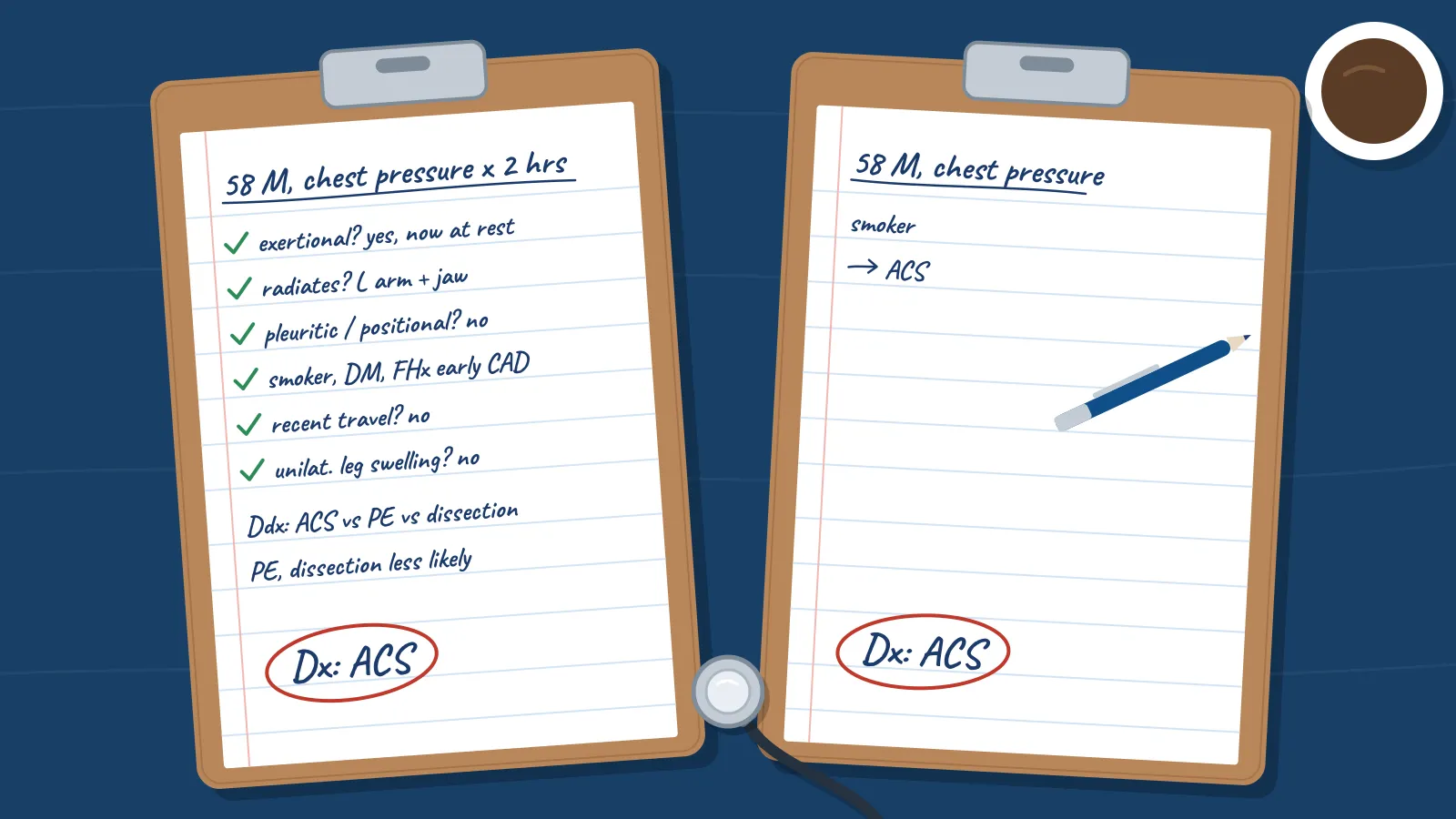
The first student takes a systematic approach to the history. They clarify the characteristics of the discomfort: whether it is exertional, whether it radiates to the arm or jaw, and whether it is pleuritic or positional. They explore associated symptoms and relevant history, including cardiac risk factors such as smoking, diabetes, and family history of premature coronary disease. They also look for findings that would support alternative explanations, such as recent travel or unilateral leg swelling that would raise concern for pulmonary embolism. As new information emerges, they adjust their line of questioning and recognize where uncertainty remains.
The second student recognizes a familiar illness script early and moves quickly toward a conclusion. Hearing “chest pressure” from a 58-year-old smoker, they settle on acute coronary syndrome (ACS) and spend the rest of the encounter gathering evidence to confirm it. They ask fewer follow-up questions, leave potentially relevant findings unexplored, and do little to test competing explanations. They never ask about recent travel, leg swelling, or whether the pain is pleuritic. Even though the student is right about ACS (the patient has an NSTEMI), their process offers little evidence of how they would reason through a less typical presentation, or a case where the same chest pressure turned out to be a pulmonary embolism or aortic dissection. Premature closure on ACS in those cases could delay the right diagnosis, and in a dissection, ACS treatment such as antiplatelets or anticoagulation could cause harm.
The distinction is not merely academic. When the clinical picture changes, the first student may be better equipped to adapt. The second may struggle when familiar cues are absent or contradictory.
A single encounter can’t establish a learner’s overall competence, and clinical reasoning is best judged across many cases. Still, identical outcomes don’t guarantee equivalent reasoning, and assessment methods need to account for that possibility.
Medical educators have long recognized that clinical competence cannot be reduced to knowledge recall. Yet translating that understanding into assessment remains challenging. Even well-designed examinations, structured clinical assessments, and standardized patient encounters provide only a partial view of how learners reason through a clinical problem.
The challenge is not simply determining whether a learner knows the right answer. It is discerning whether they can reliably apply their knowledge when gathering information, interpreting findings, weighing alternatives, and making decisions as a patient encounter unfolds.
That distinction has implications beyond assessment. It affects the feedback learners receive, the gaps faculty can identify, and the opportunities available to help students refine their clinical judgment before entering practice.
What Outcome Measures Miss
Educators have worked for decades to assess both clinical outcomes and the reasoning behind them. The field has developed a range of methods to evaluate clinical knowledge, decision-making, and performance. Each shows some of a learner’s reasoning and leaves some out.
Structured assessments, for example, support consistency and comparability. Rubrics can make expectations explicit, and assessment and management plans can provide useful evidence of a learner’s clinical conclusions. However, when evaluation centers primarily on these outputs, the reasoning that produced them is hard to see.
A correct diagnosis might reflect a well-developed process of information gathering and hypothesis testing. It might also reflect anchoring, where a learner locks onto an early impression and interprets each new finding through it, or premature closure, where they accept a diagnosis before verifying it and stop considering alternatives. The second student above did both. The final answer alone won’t show which one happened.
This creates a practical challenge for faculty: how do we distinguish a correct conclusion supported by sound clinical reasoning from one that happens to be correct?
Outcome-based assessment works better when it is paired with evidence of the process. Understanding how learners navigate an encounter can help educators interpret assessment results more accurately, identify specific reasoning gaps, and tailor feedback to the learner’s needs.
Making the Reasoning Process Visible
To understand where a learner’s performance came from, educators need evidence from the encounter itself: the questions asked, the information pursued, the responses to new findings, and the decisions made along the way.
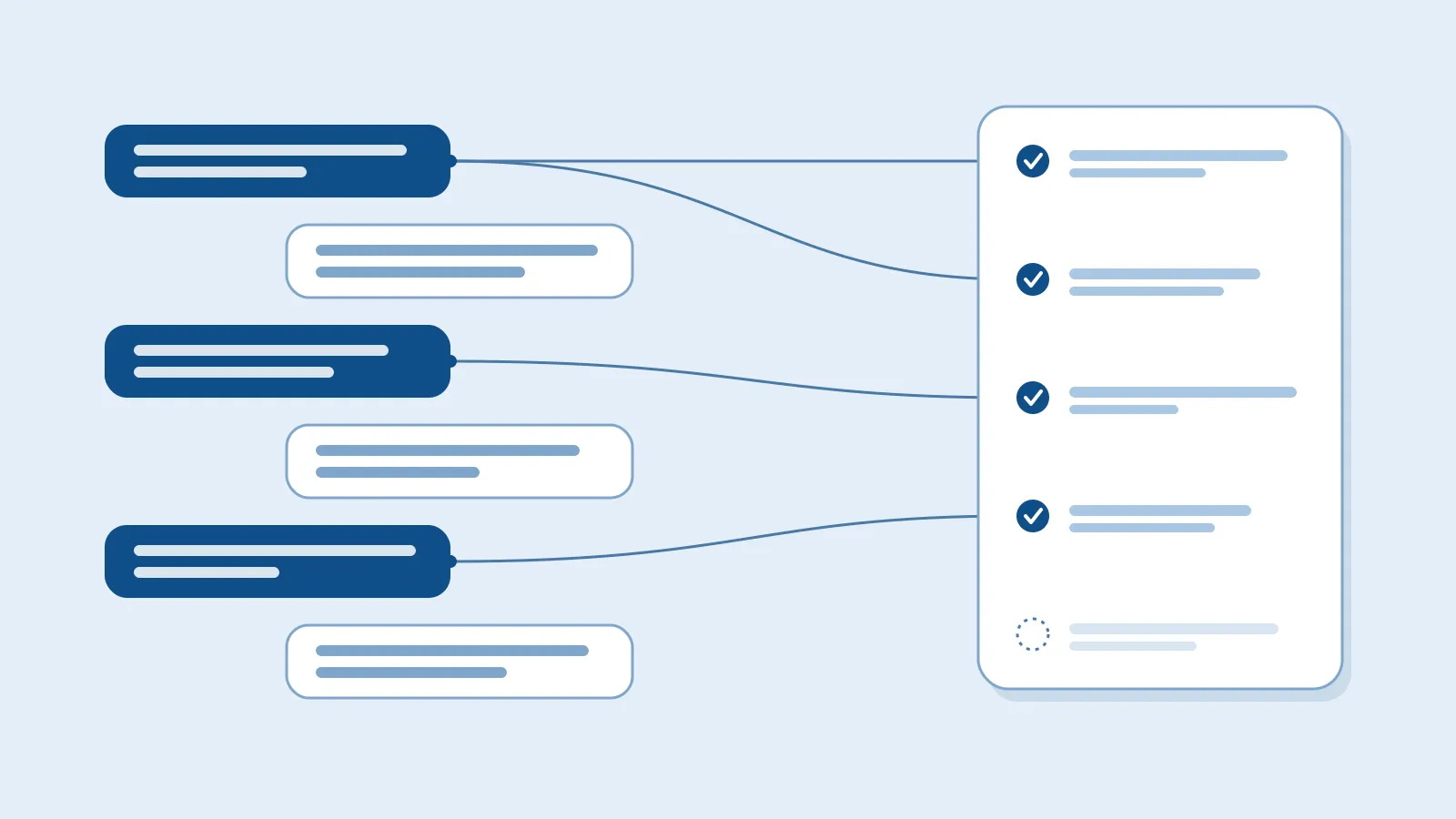
That evidence makes feedback more precise. A student who reaches an incorrect conclusion after a thoughtful but incomplete assessment may need different guidance from one who fails to gather essential information in the first place. Similarly, a student who reaches the correct diagnosis without adequately considering alternatives may benefit from feedback on testing assumptions.
The goal is to capture enough of the reasoning process to make assessment findings more informative and feedback more specific, without turning every encounter into an exhaustive review.
This matters more as learners move into clinical environments where information is incomplete, presentations are ambiguous, and decisions must evolve as new evidence emerges. The ability to reason through these conditions cannot be fully assessed by examining a final answer alone.
Capturing the Full Encounter
Interactive patient simulations offer one way to capture more of the clinical encounter while creating additional opportunities for practice. Learners can gather information, ask follow-up questions, and work through clinical scenarios. Educators can then examine both the resulting decisions and the process that led to them.
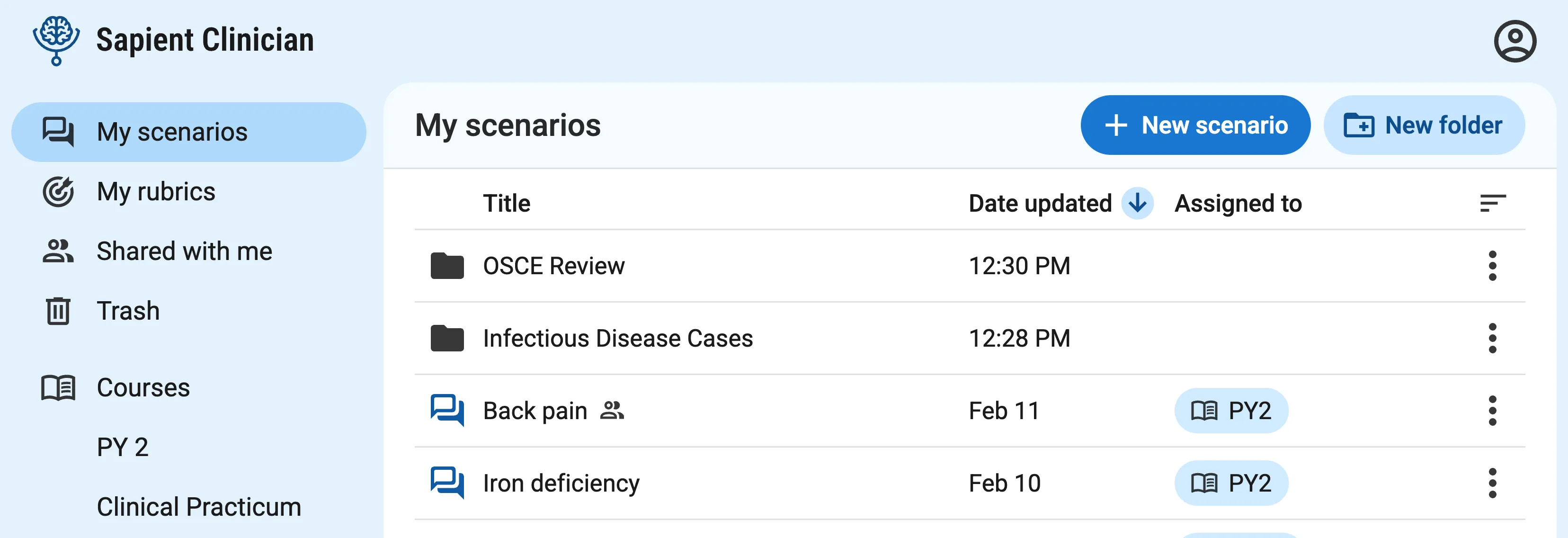
At Sapient Clinician, our AI-powered virtual patient platform is designed to support this broader view of learner performance. The AI grader evaluates the complete end-to-end encounter against a defined rubric, rather than assessing only the learner’s final assessment and plan. The interaction transcript also gives faculty an opportunity to review how learners approached the conversation and what information they pursued.
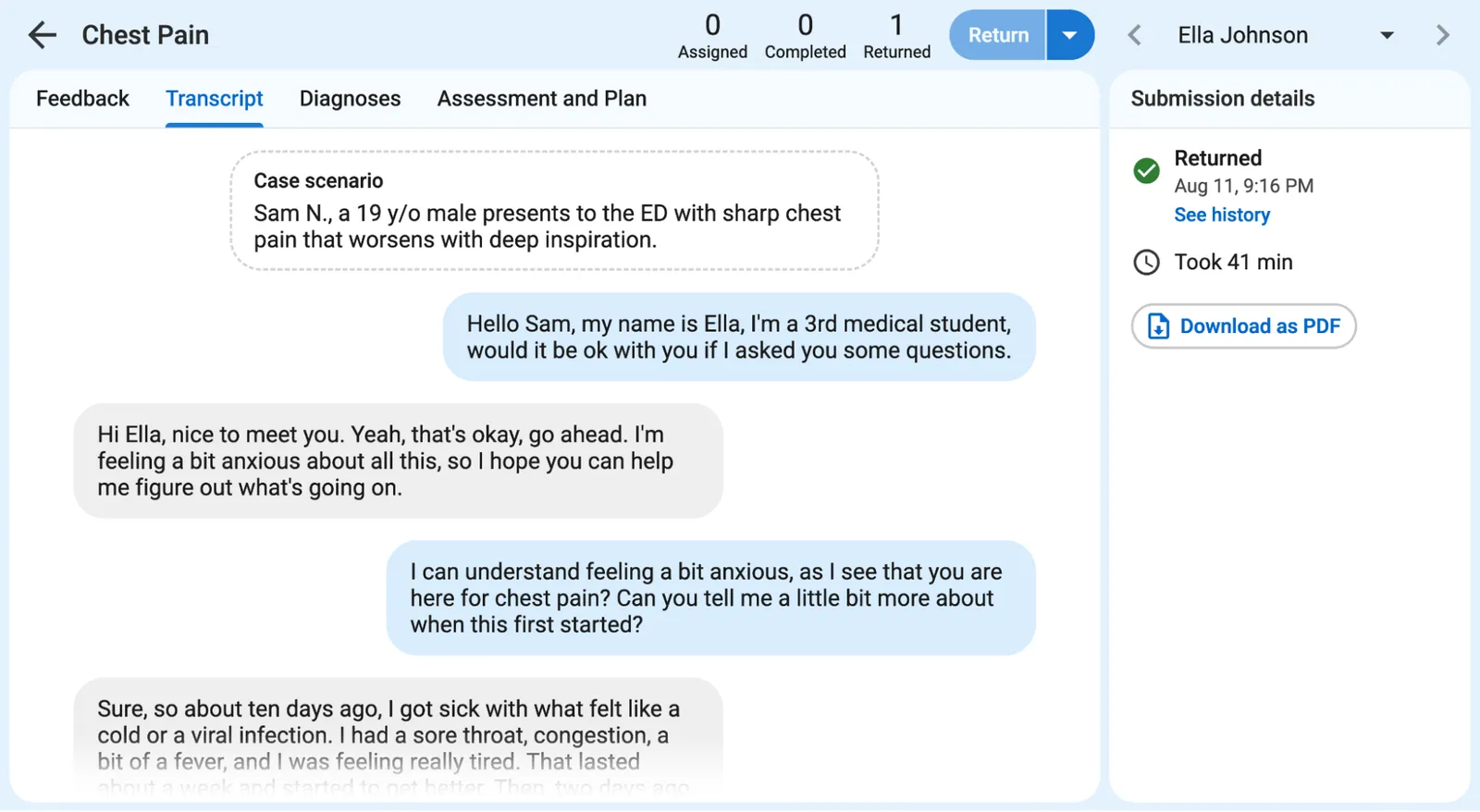
This connects the outcome of an encounter with the process that produced it. Rather than relying exclusively on a final answer or summary, educators have additional evidence to consider when evaluating performance against learning objectives and identifying opportunities for targeted feedback.
As with any assessment approach, the quality of the results depends on the learning objectives, rubric design, and context in which the tool is used. AI-generated evaluations should support, not replace, faculty expertise and judgment. They help educators examine aspects of performance that might otherwise be difficult to capture consistently at scale.
Building Better Clinical Reasoning
Medical education has many ways to measure what learners know. It has fewer ways to measure how well they apply that knowledge when patient encounters demand interpretation, judgment, and adaptation.
Making the reasoning process more visible strengthens the connection between assessment and learning. It can help faculty distinguish between different sources of performance gaps, deliver more specific feedback, and give learners a clearer understanding of how to improve.
The answer still matters. But so does the reasoning behind it.