
Communication skills
Practice the hardest conversations before they're real.
Learners practice out loud with an AI patient who reacts like a person, then get feedback on how they handled it.
Conversations learners can practice.
Breaking bad news
A new cancer diagnosis, an abnormal scan, a poor prognosis.
Disclosing an error
Explaining what happened, apologizing, and what comes next.
Counseling & education
A new medication, a lifestyle change, a hesitant patient.
Family conversations
Speak to a parent, family member or caregiver who has their own worries and questions.
Consulting the care team
Consult other members of the virtual healthcare team: present the case clearly and ask for help.
Your own scenario
Any conversation your curriculum needs, built from your materials.
Patients who respond the way people do.
- Set a focused-conversation objective instead of a diagnosis.
- Describe how the patient behaves, like anxious, angry, quiet or in denial, and the AI patient plays it consistently.
- Voice mode means learners practice saying the words out loud, not just typing them.
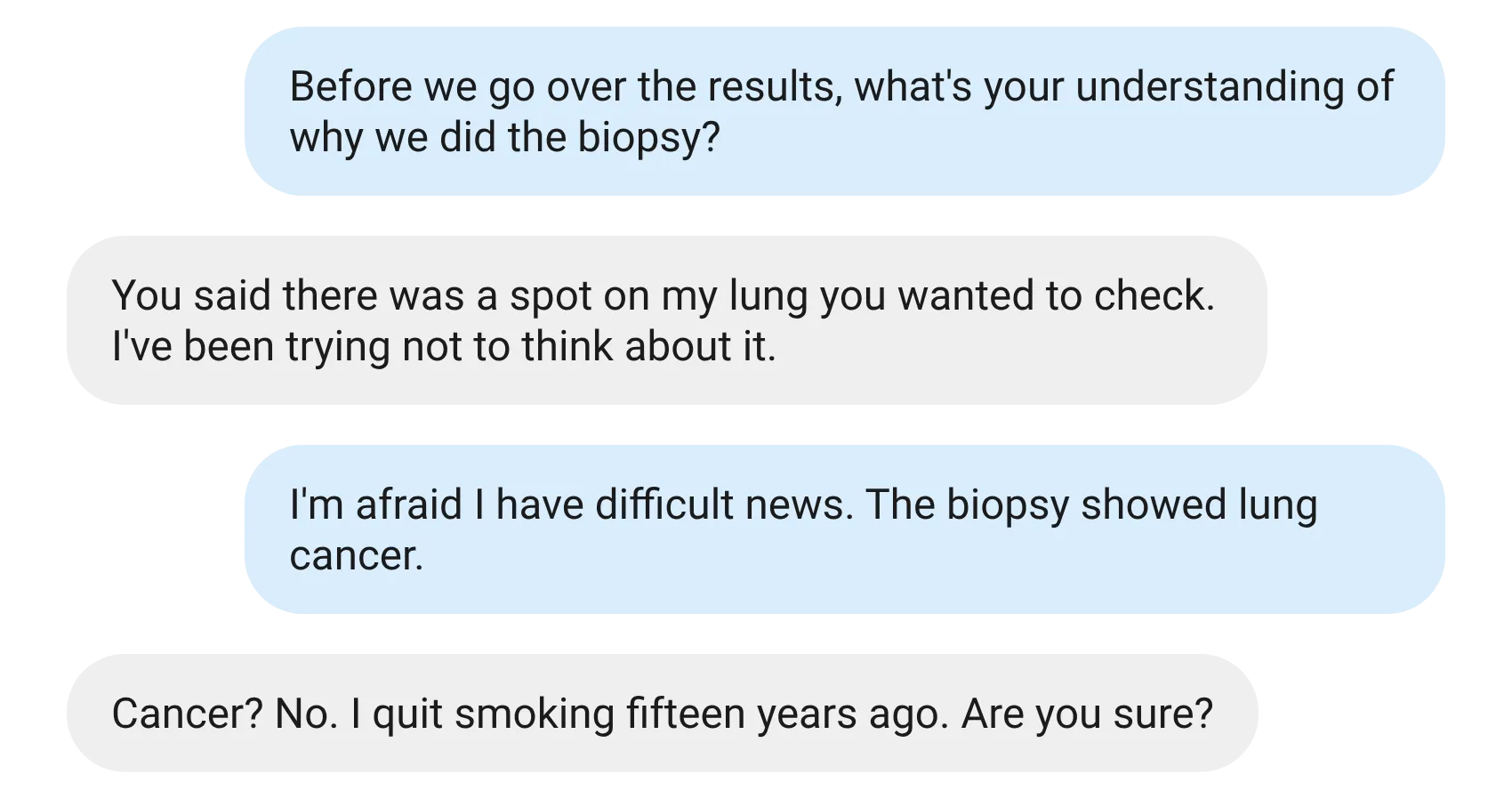
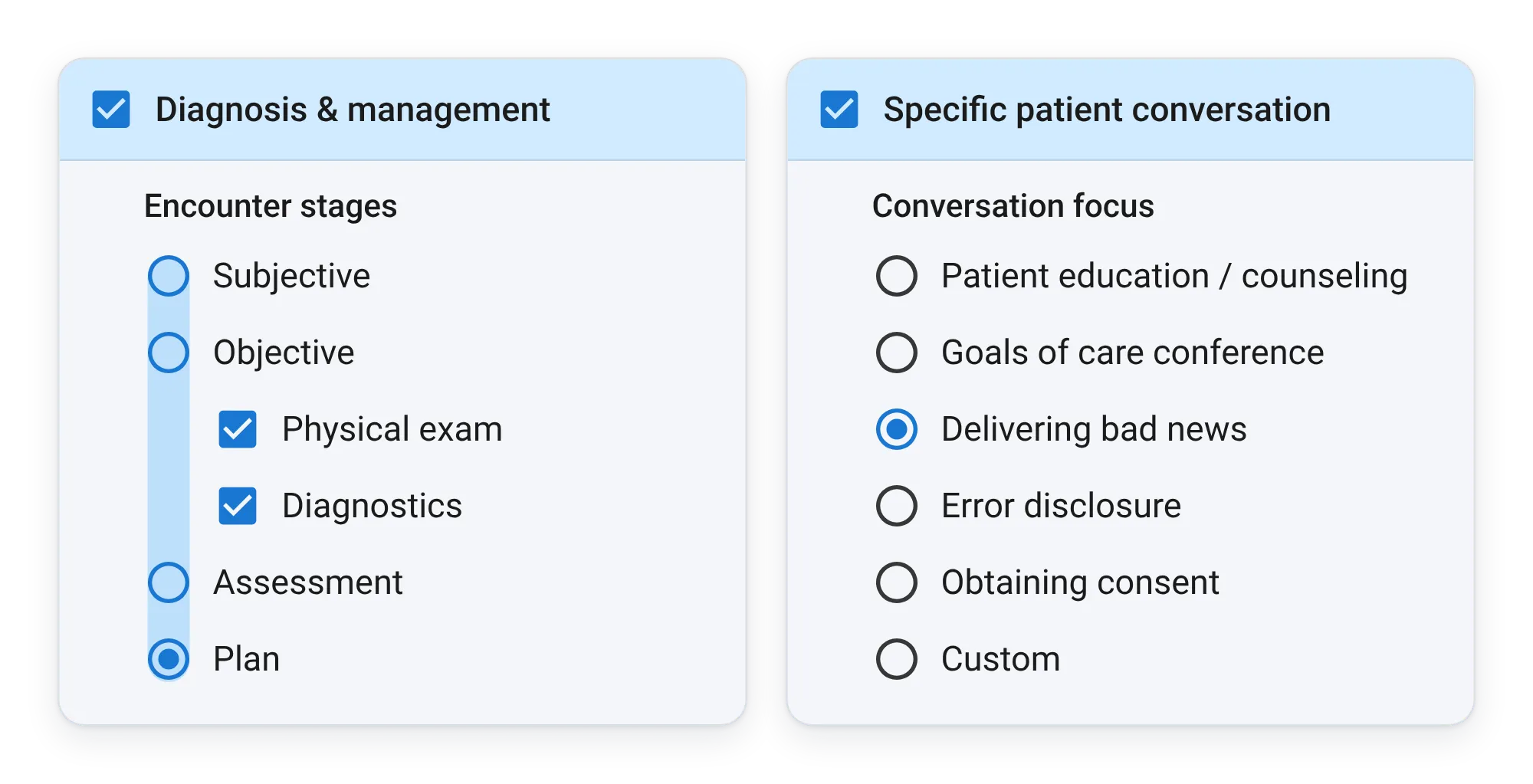
Standalone or part of a full case.
Run a hard conversation as its own focused case, or build it into the end of a full encounter: learners work up the patient, reach the diagnosis, and then close the loop by telling them.
Building it into a full case is closer to how it happens in practice, where the bad news isn't announced ahead of time.
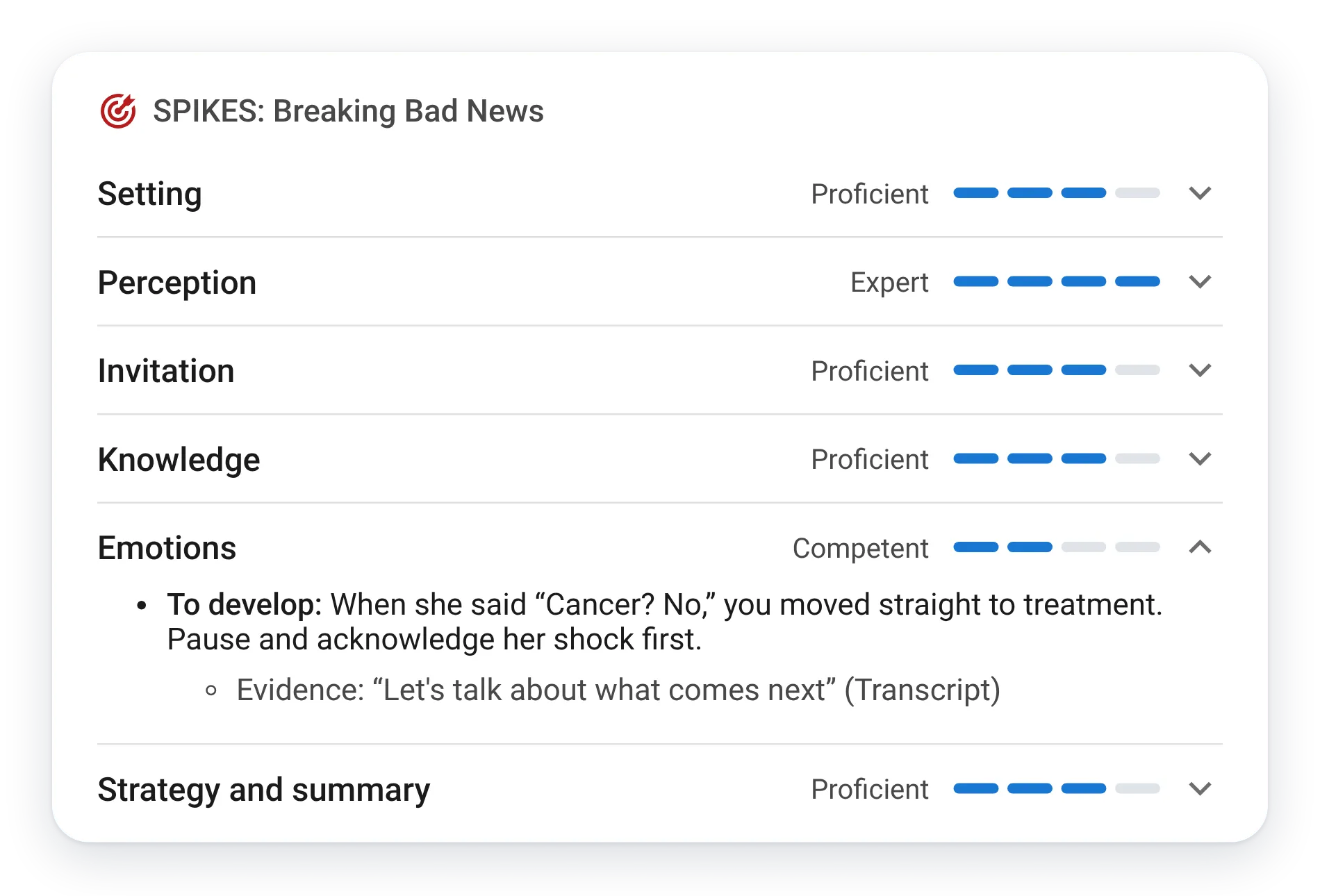
Feedback on the communication skills clinical practice depends on.
Score each conversation on the communication rubric you already teach, step by step, like SPIKES for breaking bad news.
Learners see what they did well and exactly where the conversation slipped, tied to what they actually said.
Built for every kind of program.
-
PA programs
More patient encounters before the clinical year.
-
MD programs
Clinical reasoning practice from the first year on.
-
DO programs
The osteopathic encounter, structural exam included.
-
Nursing & NP
NP diagnostic reasoning, plus prelicensure practice.
-
Residency & fellowships
Cases built into every rotation.
-
Health systems
Onboarding and ongoing training for clinicians.
"Being able to practice out loud with the AI patient helped me calm my nerves going into the in person OSCE's."
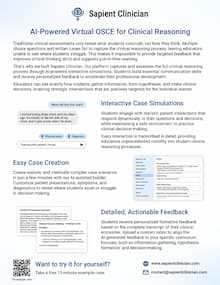
Share with your team
Sapient Clinician overview
What it is, how it works and where it fits, for colleagues or your curriculum committee.