
DO programs
Practice the osteopathic encounter, structural exam included.
Give osteopathic medical students frequent, realistic patient encounters, with structural findings in the physical exam and feedback scored on your college's own rubrics.
A few ways colleges of osteopathic medicine use it.
Clinical skills & OPP courses
Weekly cases alongside your OPP and clinical skills curriculum, so students practice thinking osteopathically: when structural findings matter, and what they mean for the plan.
Before practical exams
Rehearse full encounters out loud before your college's OSCEs and standardized patient assessments, so exam day isn't the first time a student works a case end to end.
During rotations
Keep clinical skills practice going in the third and fourth years, when students are at community sites far from campus and the standardized patient center. Cases run anytime, on any device, so students can practice wherever they're placed.
The structural exam is part of the encounter.
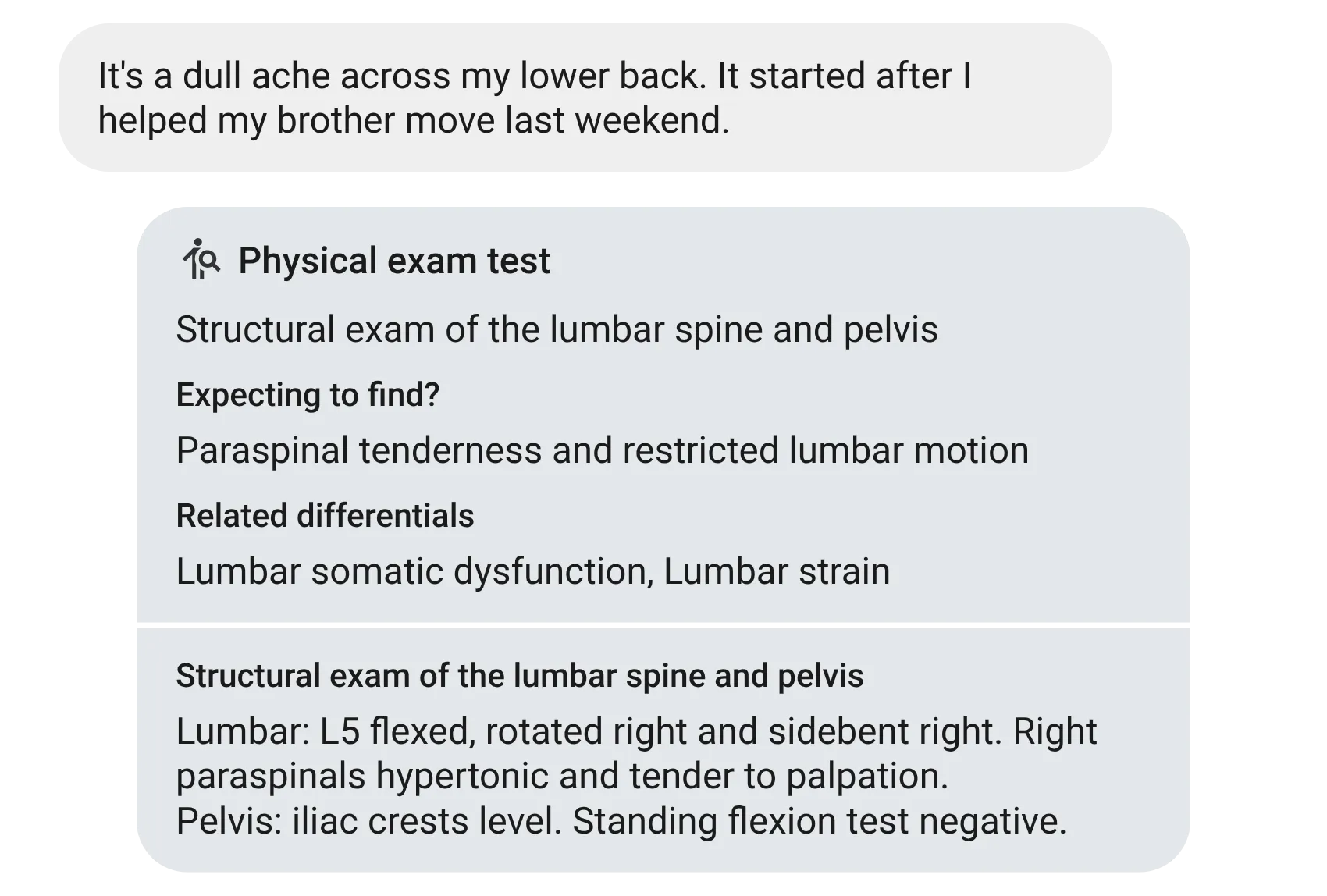
Write structural findings into the case's physical exam, like tissue texture changes, asymmetry, restricted motion and tenderness. Students decide when to perform a structural exam and which regions to examine.
Before each exam, they say what they expect to find and which differentials it relates to. The findings then shape their differential and plan, including whether OMT belongs in it.
Hands-on technique still belongs in the OMM lab. Sapient Clinician practices the decisions around it: what to examine, why, and what to do with what you find.
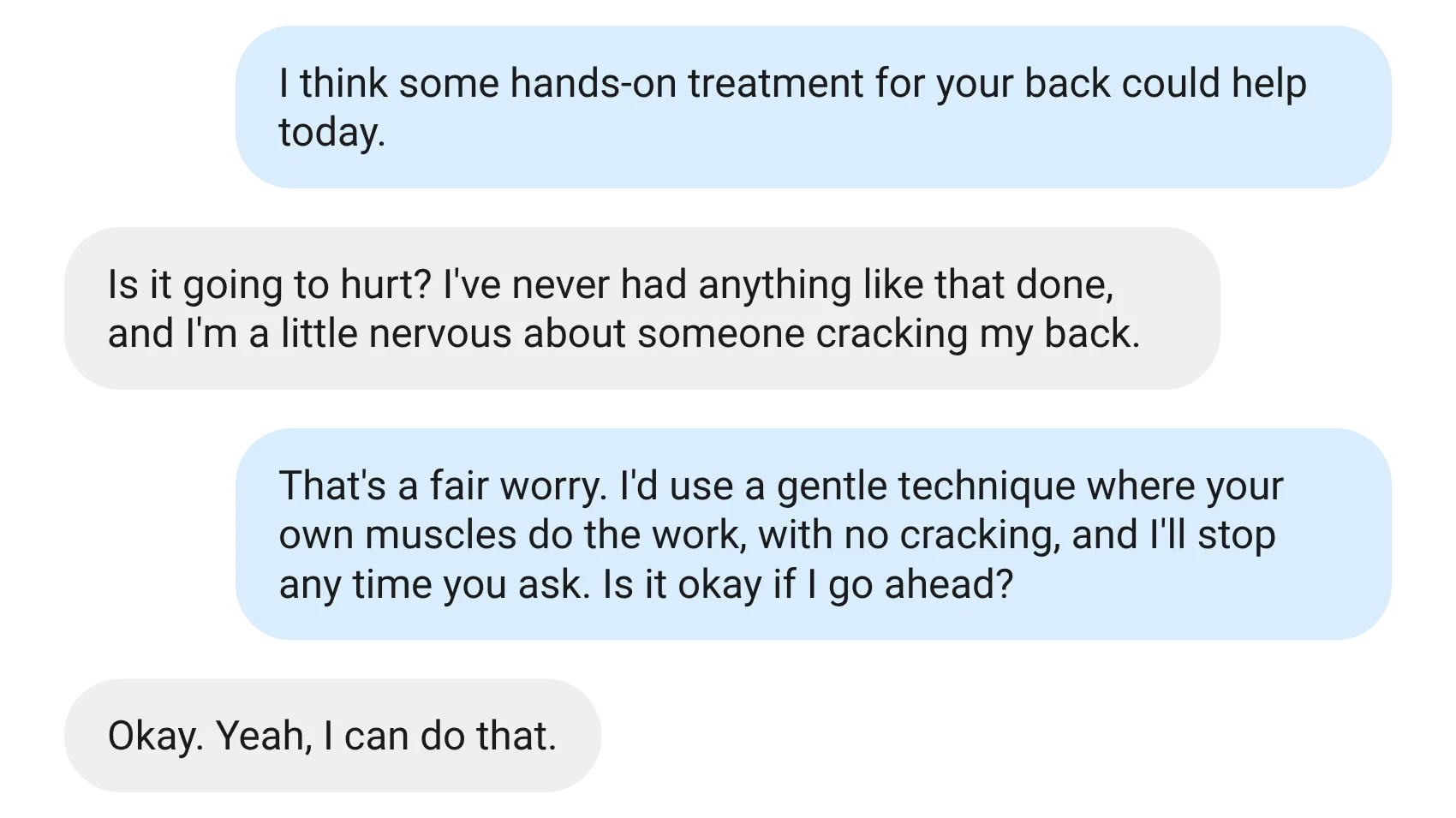
Practice the conversation around OMT, too.
Explaining OMT in plain language, answering a nervous patient's questions and getting consent are skills of their own.
Build a short case focused on just that conversation, or make it part of a full encounter, and score it on your communication rubric.
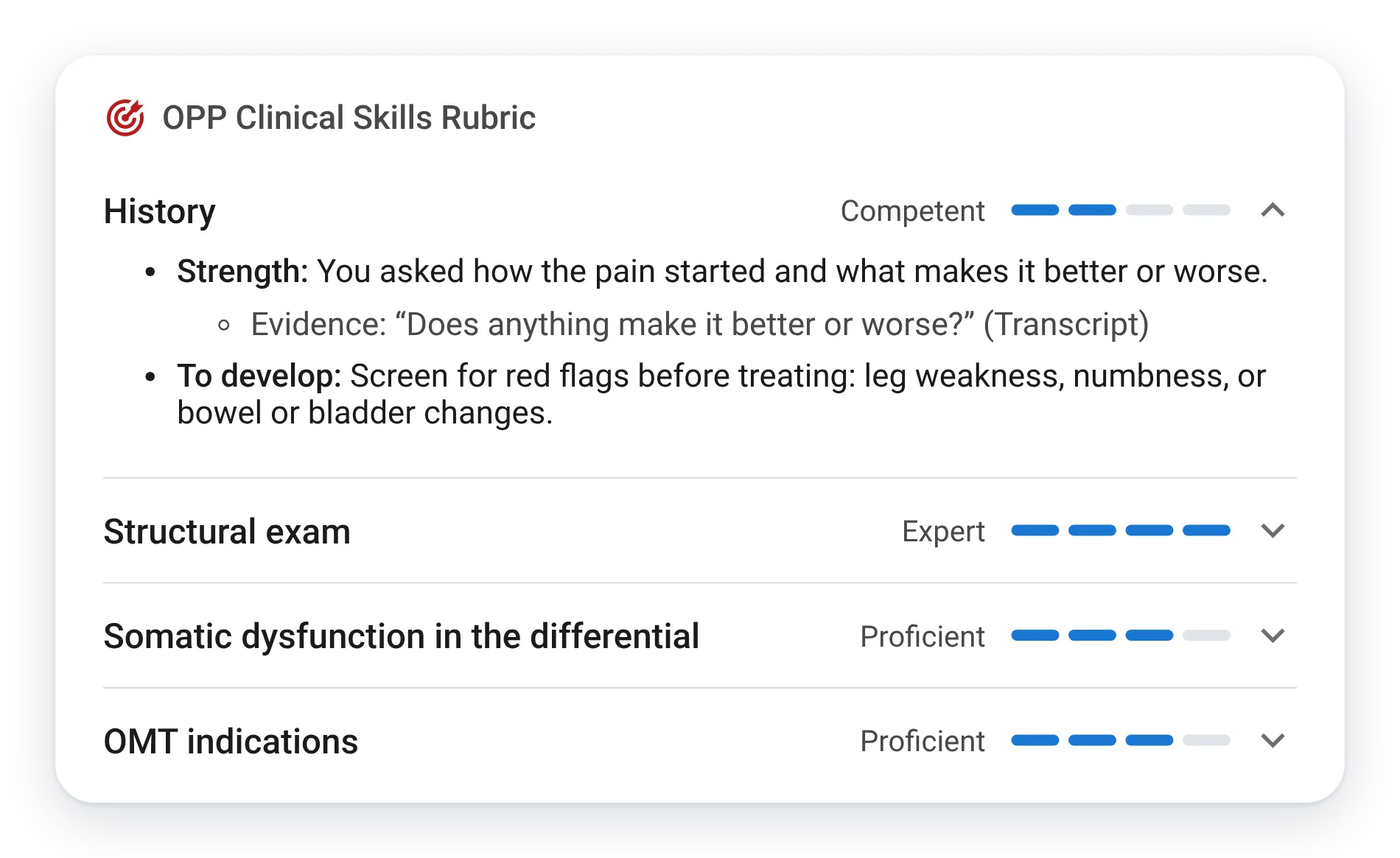
Feedback on osteopathic reasoning, not just the diagnosis.
Upload your college's rubrics, from clinical skills checklists to OPP criteria. If you map assessment to the Core EPAs and AACOM's osteopathic considerations, your rubrics can too.
Students get specific feedback on osteopathic considerations alongside their history, differential and plan, after every case.
Clinical skills verification is changing.
With Level 2-PE gone, your college attests to its students' clinical skills, and that model ends after the Class of 2028.
Starting with the Class of 2029, Level 3 eligibility moves to new NBOME pathways, including C3DO.
Getting students ready for a national clinical skills exam takes more than a handful of in-house OSCEs. Sapient Clinician adds frequent, documented encounters along the way, so students get more reps and faculty see how each one reasons long before the high-stakes exam.
How it works for colleges of osteopathic medicine.
-
Full encounters
Students work the whole visit by text or voice, from history and a physical exam with structural findings to diagnostics, a differential and an assessment and plan.
-
Your cases
Turn your college's SP cases into AI patient encounters, or build new ones around your OPP and systems curriculum, in about 15 minutes.
-
Your rubrics
Score on your college's OSCE checklists and OPP rubrics, including ones mapped to the Core EPAs, with specific feedback after every case.
Share with your team
Sapient Clinician overview
What it is, how it works and where it fits, for colleagues or your curriculum committee.