
Residency & fellowships
More observed reasoning, without more faculty hours.
AI patient encounters for residents and APP fellows: for every rotation, milestone evidence and the conversations that are hardest to teach on a busy service.
A few ways residency and fellowship programs use it.
During rotations
Cases matched to each rotation, so every block includes documented encounters in that specialty.
Milestone evidence
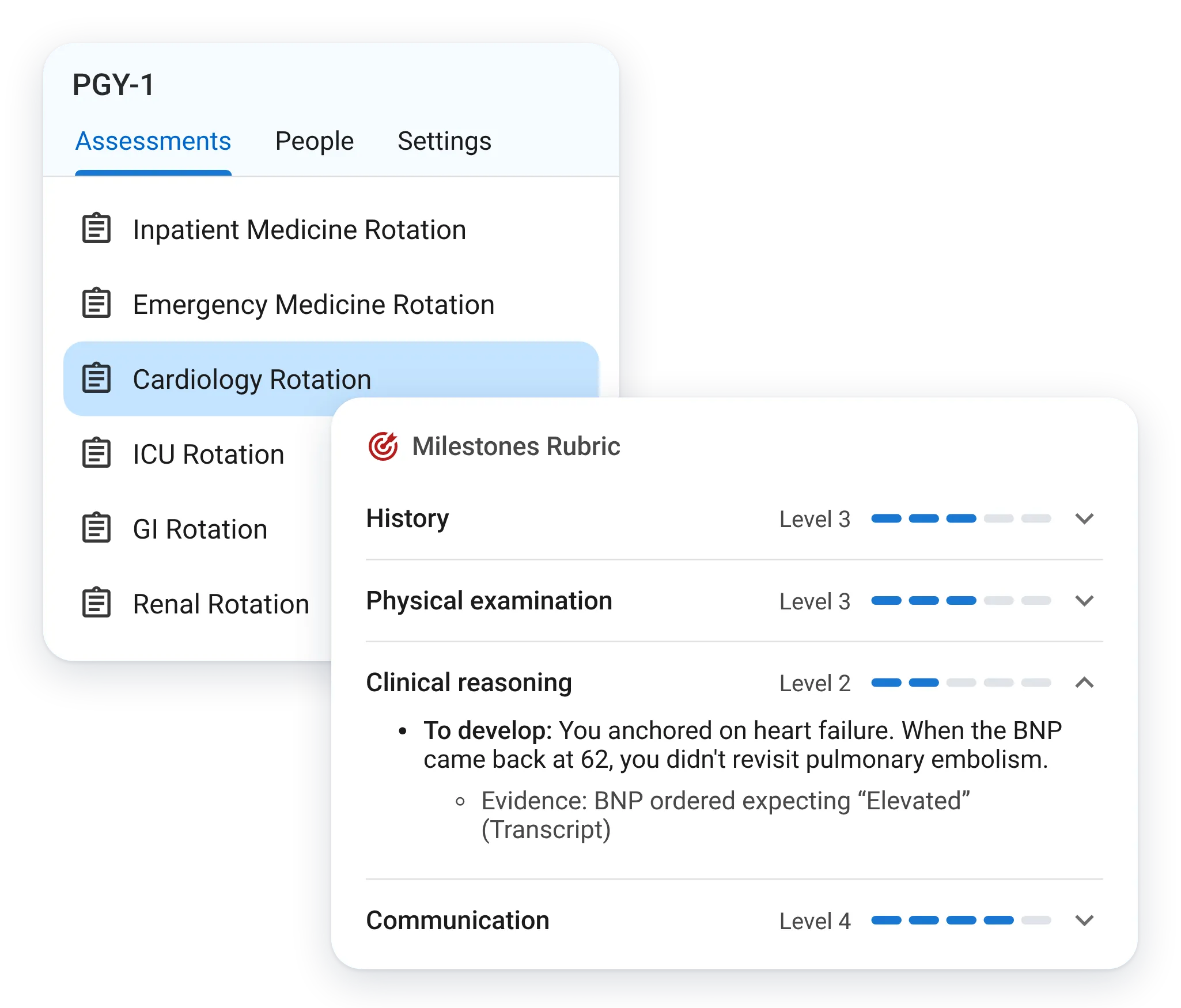
Score encounters on milestone-based rubrics to add data points between direct observations.
Hard conversations
Disclosing an error, breaking bad news and goals of care, practiced out loud before they happen.
Remediation
A focused, repeatable case built around exactly where a trainee is struggling.
Direct observation is the scarcest thing on the wards.
Your Clinical Competency Committee needs real evidence for every milestone review, but faculty rarely get to watch a resident take a full history and reason to a plan from start to finish.
Sapient Clinician gives you the whole encounter as a transcript, with every question, exam, order and differential, plus feedback scored on your milestone-based rubric.
Because it arrives already scored, faculty time goes to reviewing and coaching, not grading from scratch.
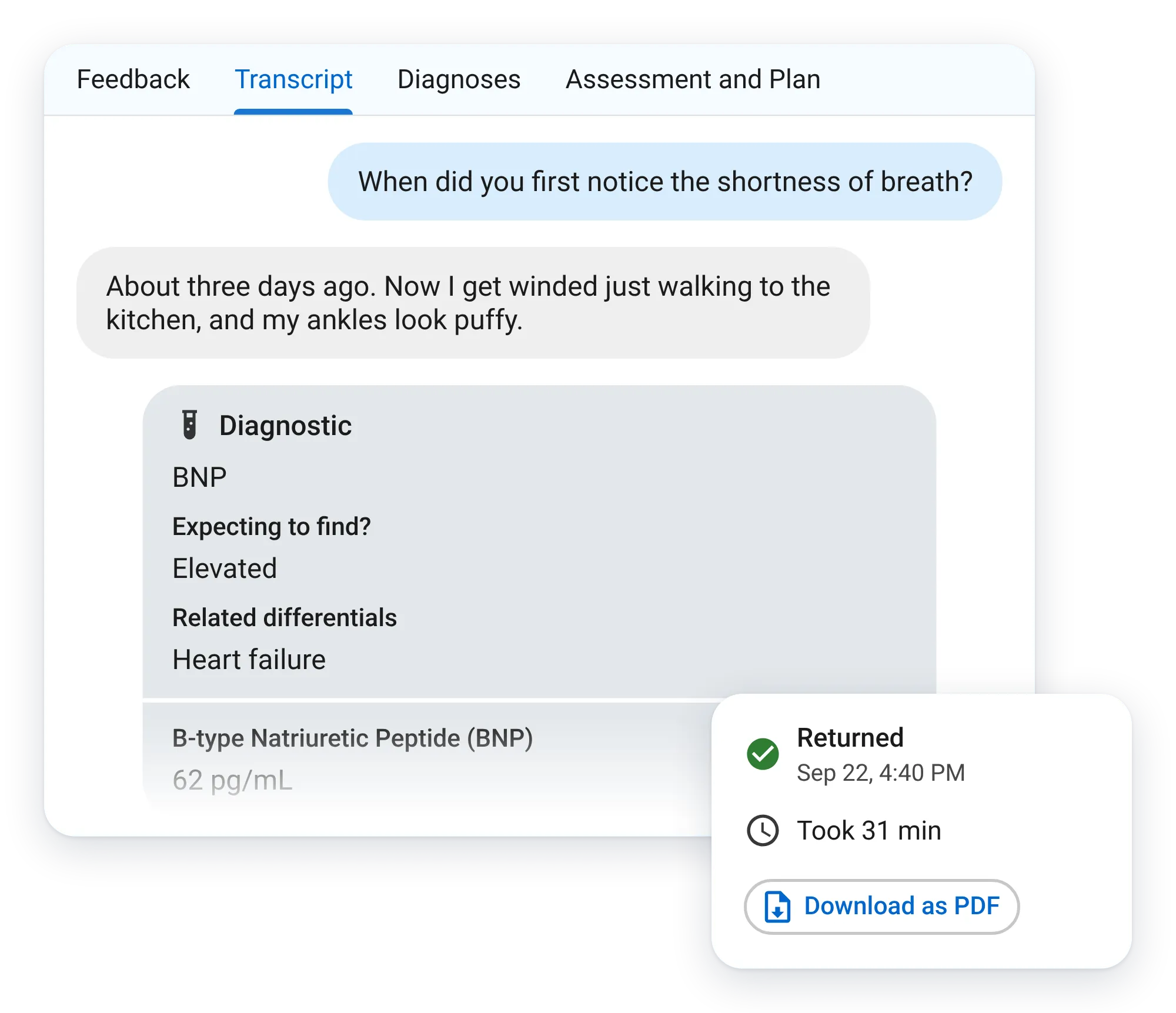
Built into every rotation.
Assign cases on each rotation, matched to the specialty your residents or fellows are in. Every block then includes documented encounters in that area, scored on your milestone-based rubric or your own checklists.
Over the year, faculty see how each trainee's reasoning develops, not only when someone happens to be watching, and your Clinical Competency Committee has evidence for every review.
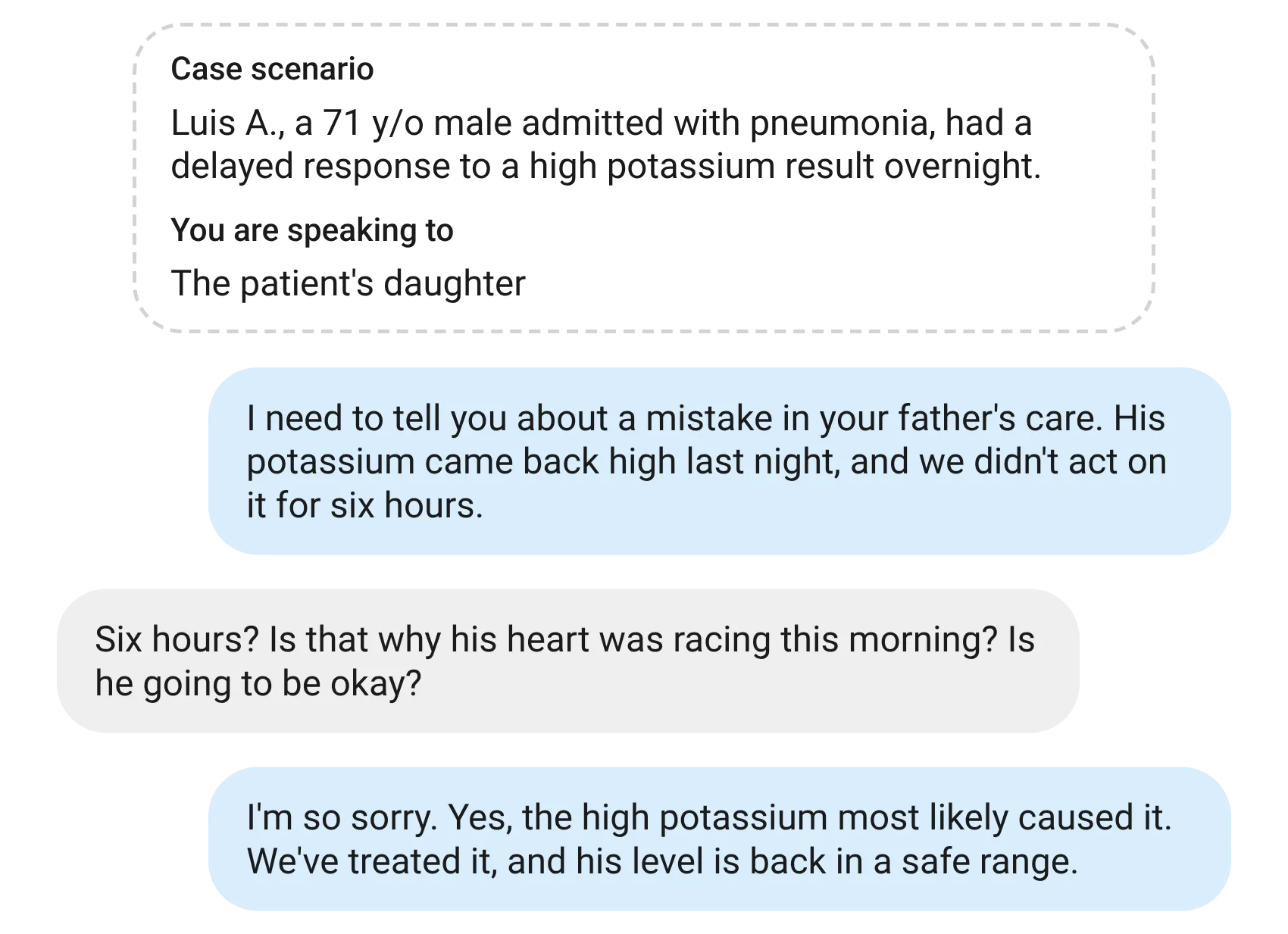
The conversations that are hardest to teach on a busy service.
Residents practice disclosing an error, breaking bad news and leading goals-of-care conversations out loud, by voice, with a patient or family member who reacts like a person.
Score each one on the communication rubric you already teach, so residents get specific feedback before the real conversation.
How it works for residency and fellowship programs.
-
Full encounters
Residents and fellows work the whole visit by text or voice, from history and exam to diagnostics, a differential and a plan, at the level of difficulty you set.
-
Your cases
Turn your program's teaching cases, or the lessons from your morbidity and mortality conferences, into AI patient encounters in about 15 minutes.
-
Your rubrics
Score on your specialty's milestones, EPAs or your own checklists, with specific feedback after every case.
Running a fellowship or transition-to-practice program inside a health system? See how health systems use it
Built by an APP fellowship director.
Our Chief Medical Officer, Diana Brewer, PA-C, directs an oncology APP fellowship and uses Sapient Clinician with her own fellows on every rotation. The product is shaped by what she needs as a fellowship director: the same cases for every fellow, feedback on her program's own rubric, and a clear record of how each fellow reasons.
Share with your team
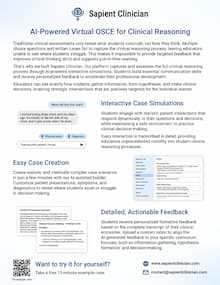
Sapient Clinician overview
What it is, how it works and where it fits, for program directors, faculty or your GME office.