
Health systems
Know where each new clinician stands before their first shift.
AI patient encounters for onboarding new APPs and physicians, transition-to-practice programs and ongoing training, built from your own protocols and scored on your own checklists.
A few ways health systems use it.
Onboarding
The same cases for every new hire in a service line, so educators see where each one stands in the first weeks.
Transition to practice
Cases throughout APP fellowships and new-graduate programs. See fellowships
Ongoing training
Refreshers on high-risk, low-frequency presentations, and practice when a protocol changes.
Telehealth
Practice virtual visits by voice: the history, the right follow-up questions, and knowing when a patient needs to be seen in person.
Continuing education
Case-based activities your continuing education team builds on its own content, as an alternative to another lecture.
Communication & safety
Disclosing an error, delivering bad news and counseling patients, practiced before it's real.
Every new hire starts from a different place.
New clinicians arrive from different programs with different experience, and preceptors rarely have time to walk each one through the presentations that matter most on your service.
Meanwhile, the National Academies estimate that most people will experience at least one diagnostic error in their lifetime. Gaps in reasoning are easier to close in practice than at the bedside.
Sapient Clinician gives every new hire the same cases and a documented record of how each one reasons, so educators know where to focus.
Built around what your service sees.
Turn the presentations your teams see most into AI patient encounters in about 15 minutes: chest pain, shortness of breath, abdominal pain, or whatever matters on your unit. Write in your own expectations for the workup, so every new hire practices it the way your team does.
When your standards change, update the case, and everyone practices the new version.
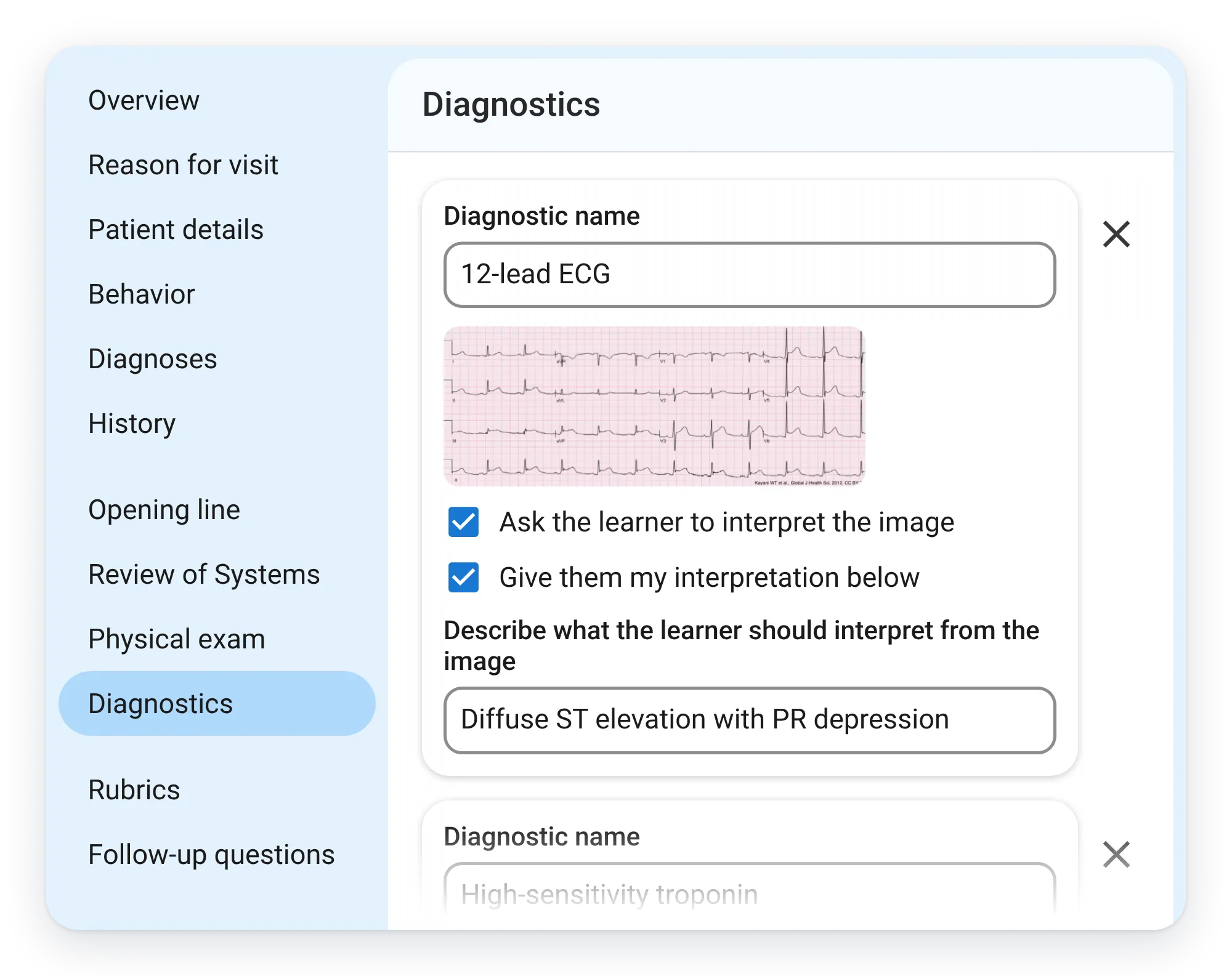
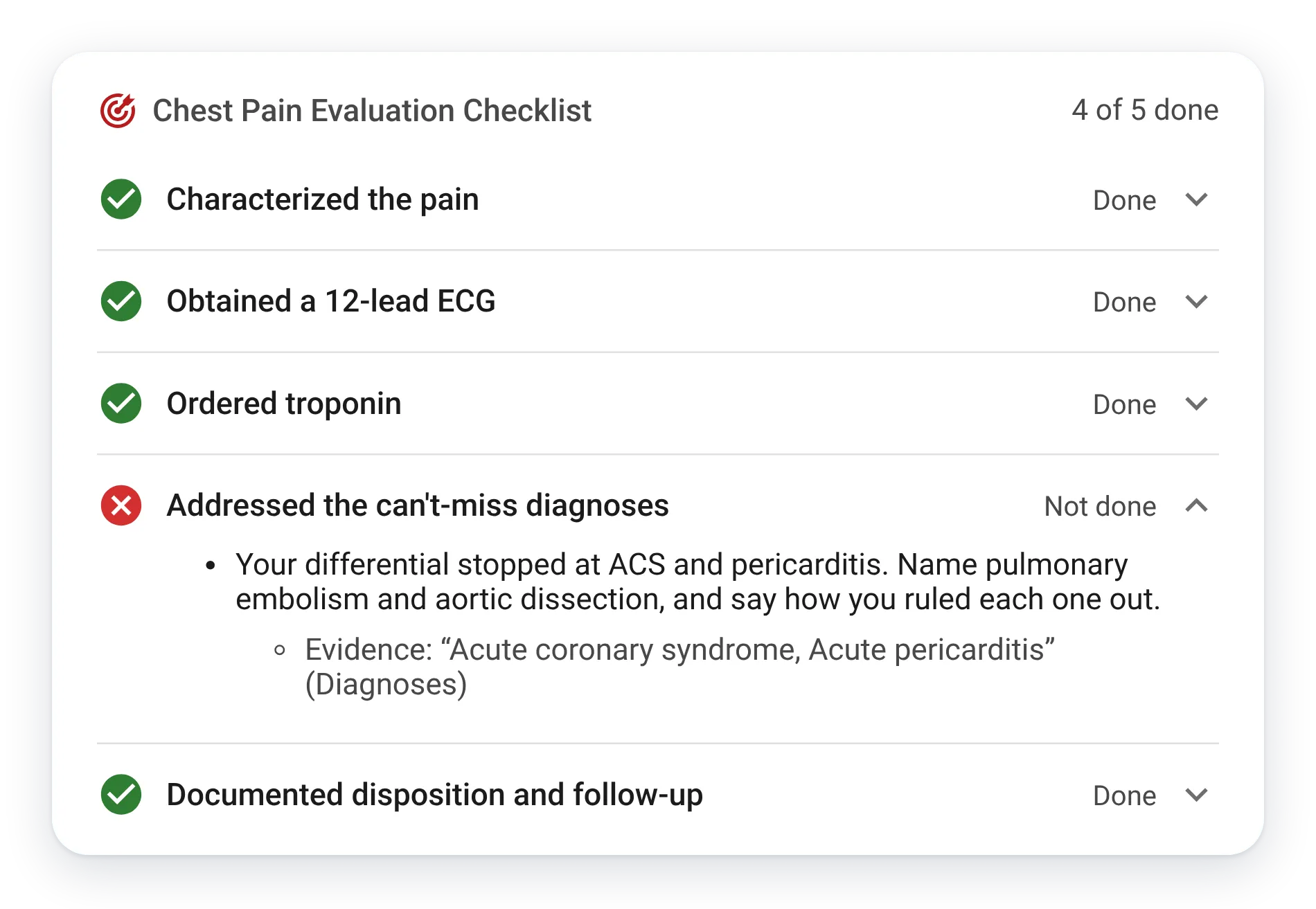
Scored on your own checklists.
Upload your competency checklists and workup criteria, in whatever format you keep them. Every clinician gets specific feedback tied to what they actually did, and managers and clinical educators get the full transcript behind each score.
How it works for health systems.
-
Full encounters
Clinicians work the whole visit by text or voice, from history and exam to diagnostics, a differential and a plan. A case takes about 15 minutes on any device, so practice fits between shifts.
-
Your cases
Turn your pathways, order sets and teaching cases into AI patient encounters in about 15 minutes.
-
Your rubrics
Score on your competency checklists and workup criteria, with specific feedback after every case.
Simulated patients, no patient data.
Every patient in Sapient Clinician is simulated, so no real patient information is involved. Learn how we protect your organization's data.
Share with your team
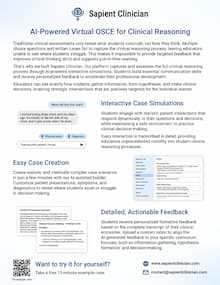
Sapient Clinician overview
What it is, how it works and where it fits, for clinical education, APP leadership or your onboarding team.