
Nursing & NP programs
Clinical judgment practice that doesn't wait for a placement.
AI patient encounters for nursing programs, from diagnostic reasoning for NP students to health assessment and patient conversations for prelicensure students. Feedback after every case, scored on your rubric.
Where it fits in your program.
NP & graduate nursing
- Complete diagnostic encounters, from history and exam to diagnostics, a differential and a plan
- Cases for advanced health assessment and primary care courses
- Extra practice when preceptor placements are hard to come by
Prelicensure RN
- Health history interviews and focused assessments for health assessment courses
- Patient teaching, practiced out loud
- Therapeutic communication with anxious patients and families
More students, the same placements.
Nursing schools turned down more than 93,000 qualified applications in 2025, and AACN names a shortage of clinical sites, faculty and preceptors among the main reasons. Graduate students are often left to find their own preceptors.
The result is uneven. What each student sees depends on where they're placed and who comes through the door: one student cares for several patients with heart failure, another never meets one before graduation.
Sapient Clinician adds practice that doesn't depend on a clinical site. Students work through cases anytime, on any device, between placements or alongside them.
It also makes training more equitable. You decide who the patients are, so students placed where
patient populations are less diverse still practice with the full range of people they'll care for.
More on building diverse cases
Your scenarios, not a fixed library.
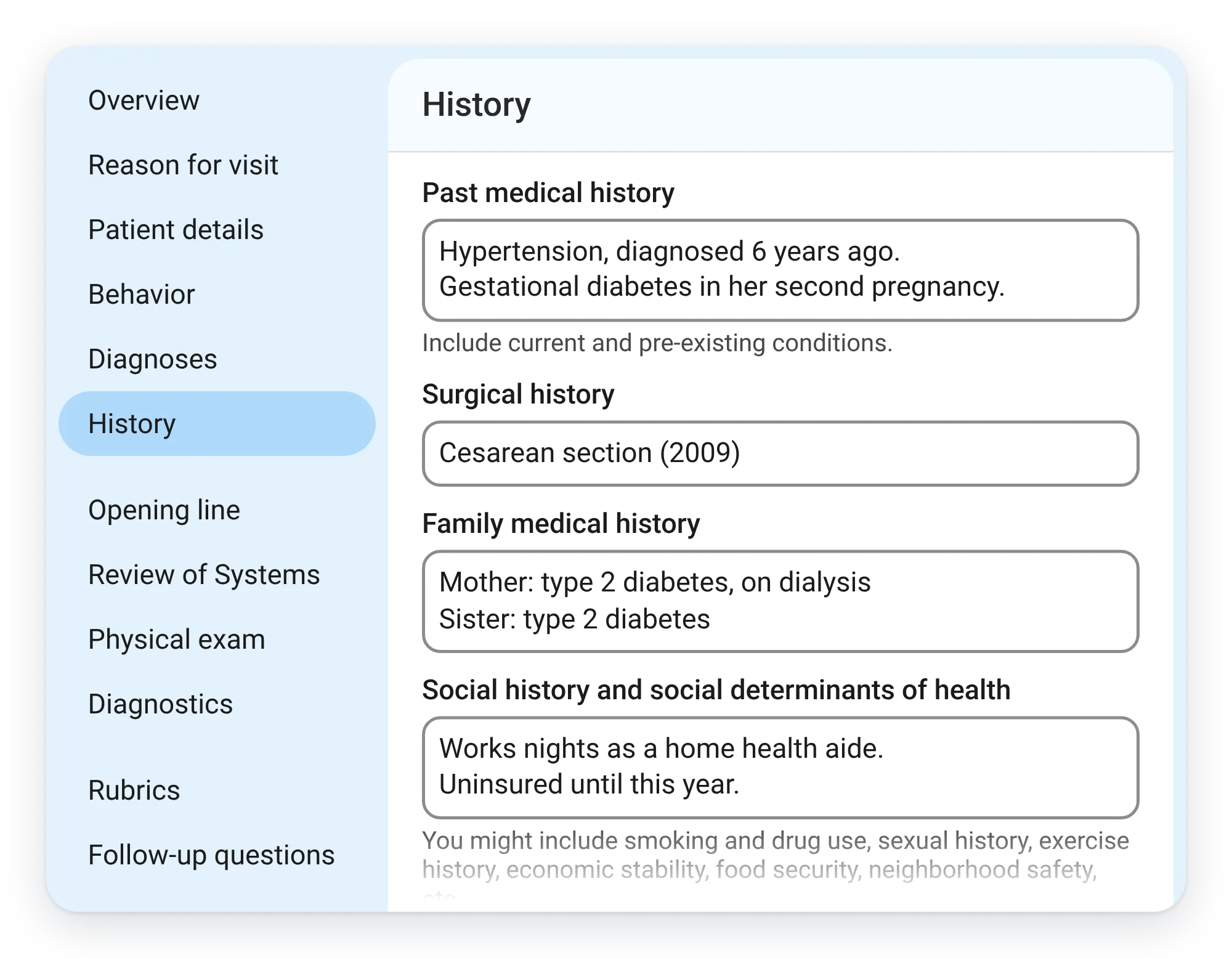
Start from the simulation scenarios your faculty already use, or fill in a guided form with the essentials. AI drafts the rest, including the review of systems, exam findings and results, and you review and edit every part.
Add social history and social determinants of health, so each patient comes with the context real patients have.
Each case takes about 15 minutes, so you can make sure every student meets the conditions your curriculum has to cover.
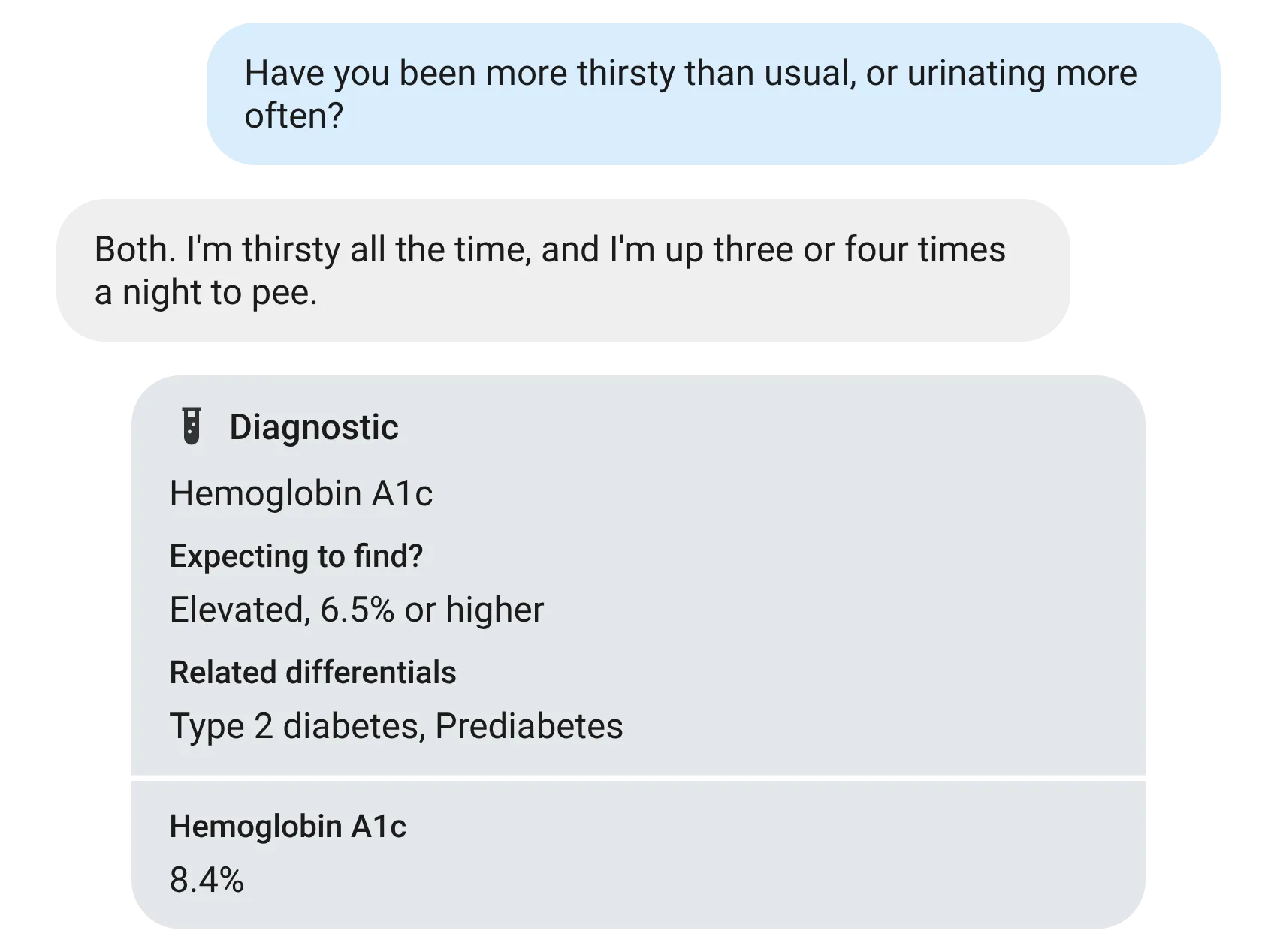
See how NP students reason, not just what they conclude.
Students talk with the patient in their own words, by voice or text, and the patient answers anything they ask while staying true to the case.
Before each test, students say what they expect to find and which differentials it relates to. Faculty see the reasoning behind every order, and the plan it led to.
It's the kind of visibility a busy preceptor rarely has time for.
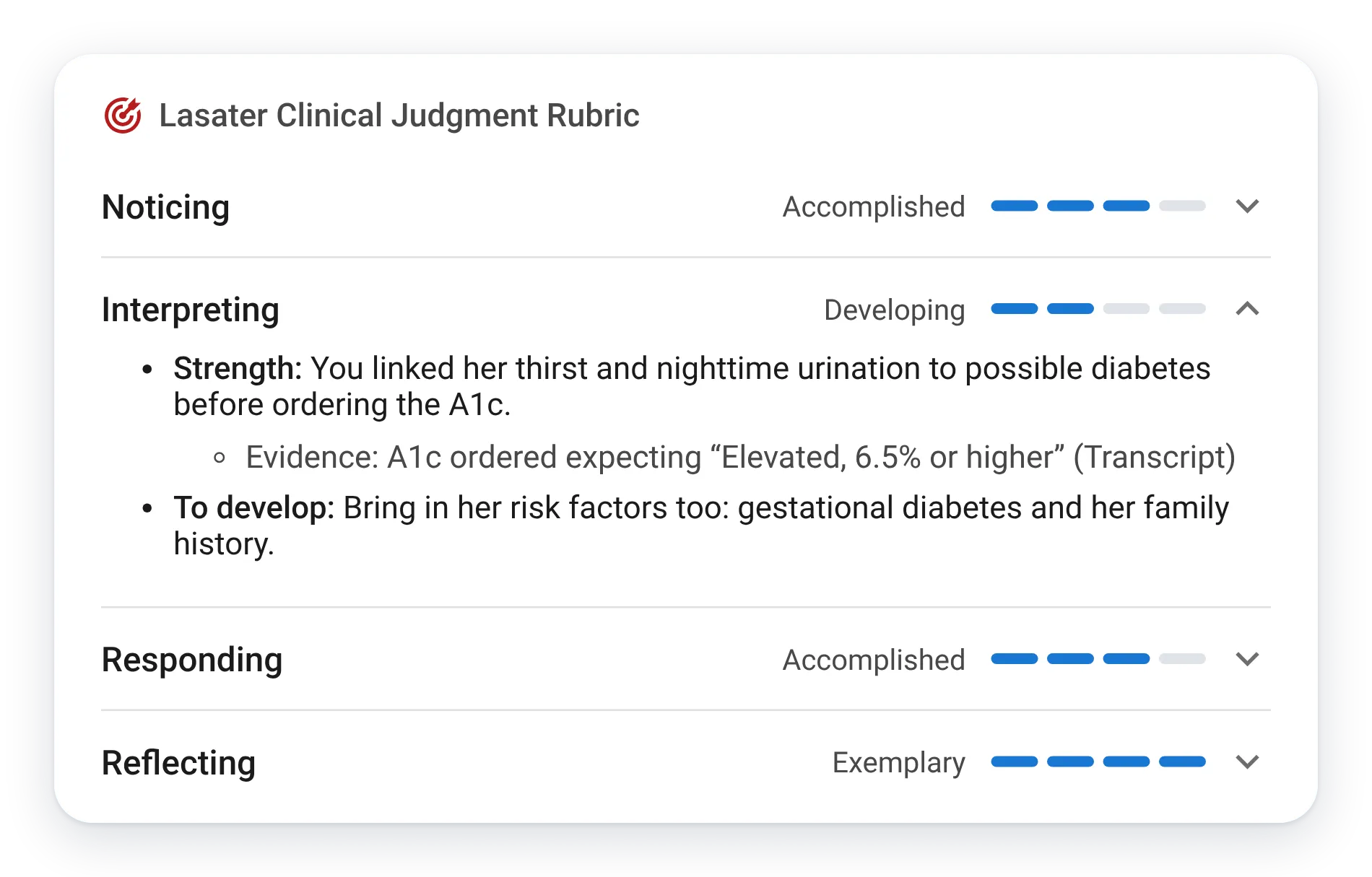
Scored on the rubrics you already use.
Upload rubrics mapped to the AACN Essentials, a clinical judgment rubric like Lasater's, or your own simulation checklists.
Students get specific feedback after every case, tied to what they actually said and did.
How it works for nursing programs.
-
Full encounters
Complete diagnostic encounters for NP students, or focused assessments and patient conversations for RN students, by text or voice.
-
Your cases
Turn your simulation scenarios into AI patient encounters, or build new ones around your curriculum, in about 15 minutes.
-
Your rubrics
Score on your simulation checklists and clinical judgment rubrics, including ones mapped to the AACN Essentials, with specific feedback after every case.
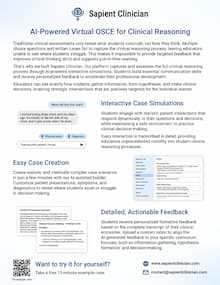
Share with your team
Sapient Clinician overview
What it is, how it works and where it fits, for colleagues or your curriculum committee.