
MD programs
Clinical reasoning practice from the first year — not just the clerkship year.
Give medical students frequent, realistic patient encounters with feedback on how they built their differential, scored on your school's own rubrics.
A few ways medical schools use it.
Pre-clerkship clinical skills
Weekly cases alongside your doctoring course and organ-system blocks, so students reason through patients long before they meet them on the wards.
Before clinical skills exams
Full encounters to rehearse before your school's OSCEs and clerkship assessments — out loud, on their own schedule.
Remediation
Targeted, repeatable cases for students who need more practice, without booking another standardized patient.
See how students build the differential.
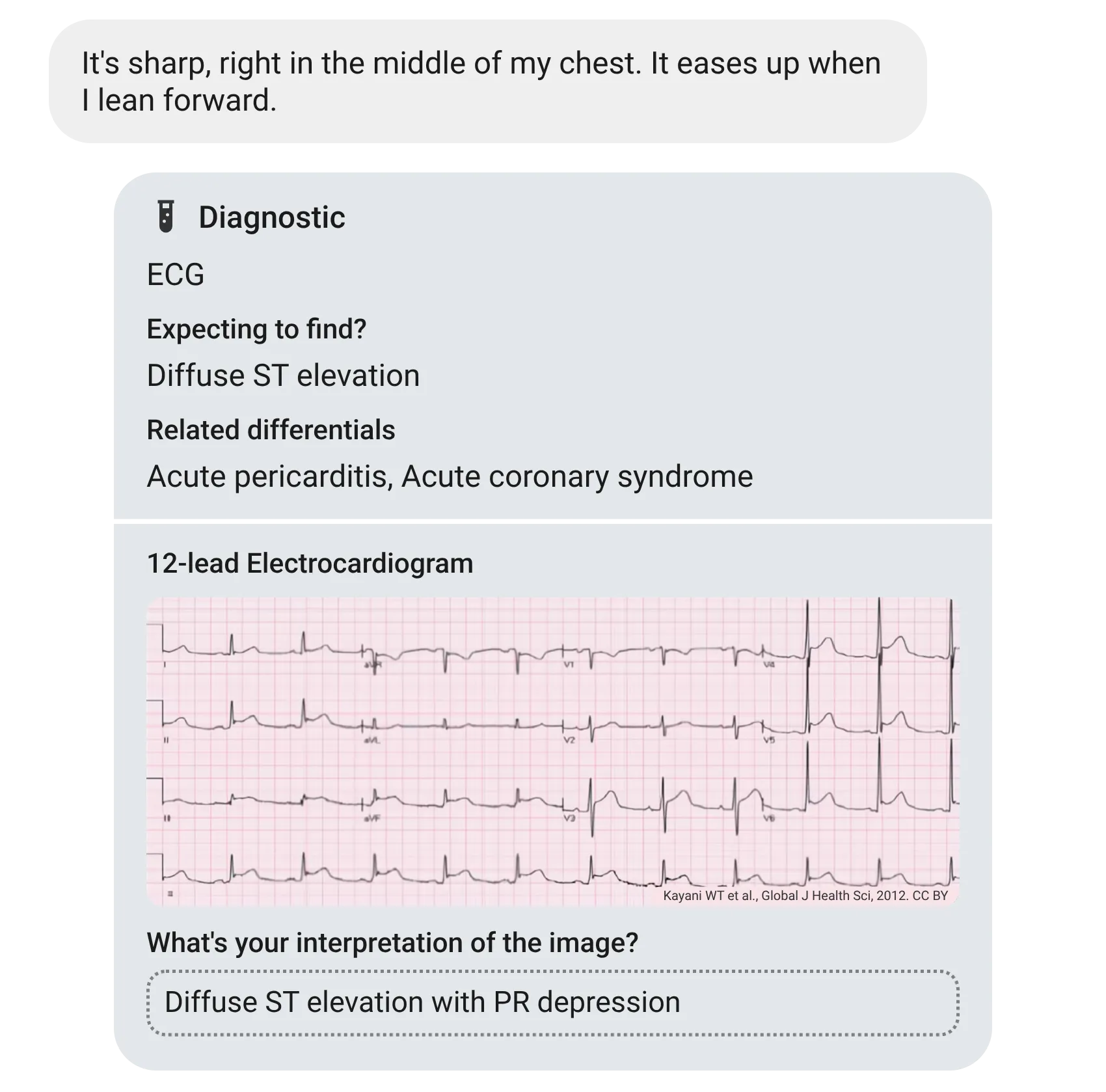
Students work the whole encounter in their own words, by voice or text: history, physical exam, diagnostics, a prioritized differential and an assessment and plan.
Before each test, they say what they expect to find and which diagnoses it would support or rule out. Faculty see why every order was placed, not just where the student landed.
Practice the Core EPAs before residency.
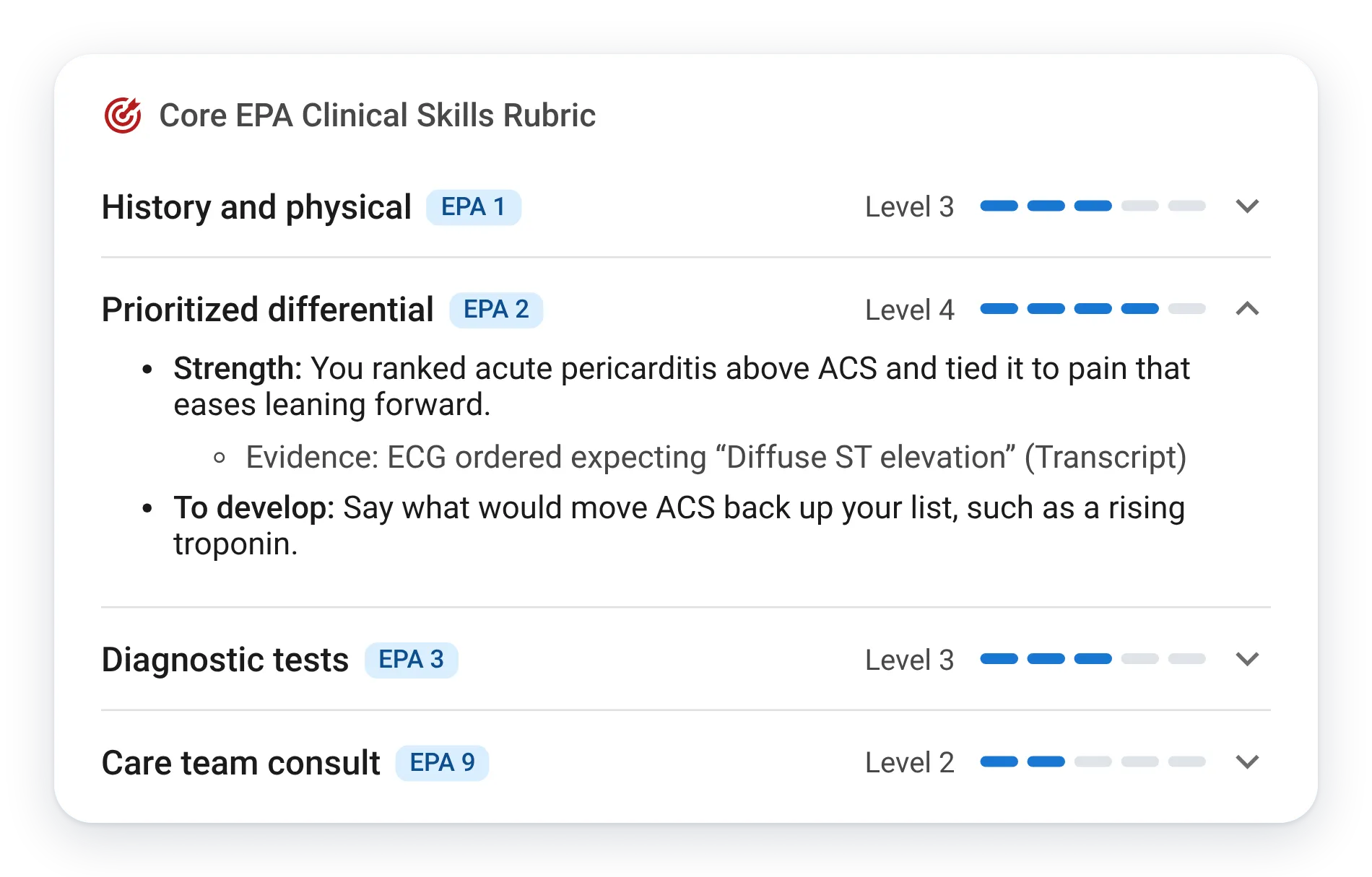
Several of the Core EPAs map directly onto a Sapient Clinician encounter, so students can practice them every week instead of waiting for a clerkship evaluation.
Score encounters on rubrics mapped to the EPAs your school tracks. Students get specific feedback after every case, in the same language as your curriculum committee.
Your SP cases, ready for every student.
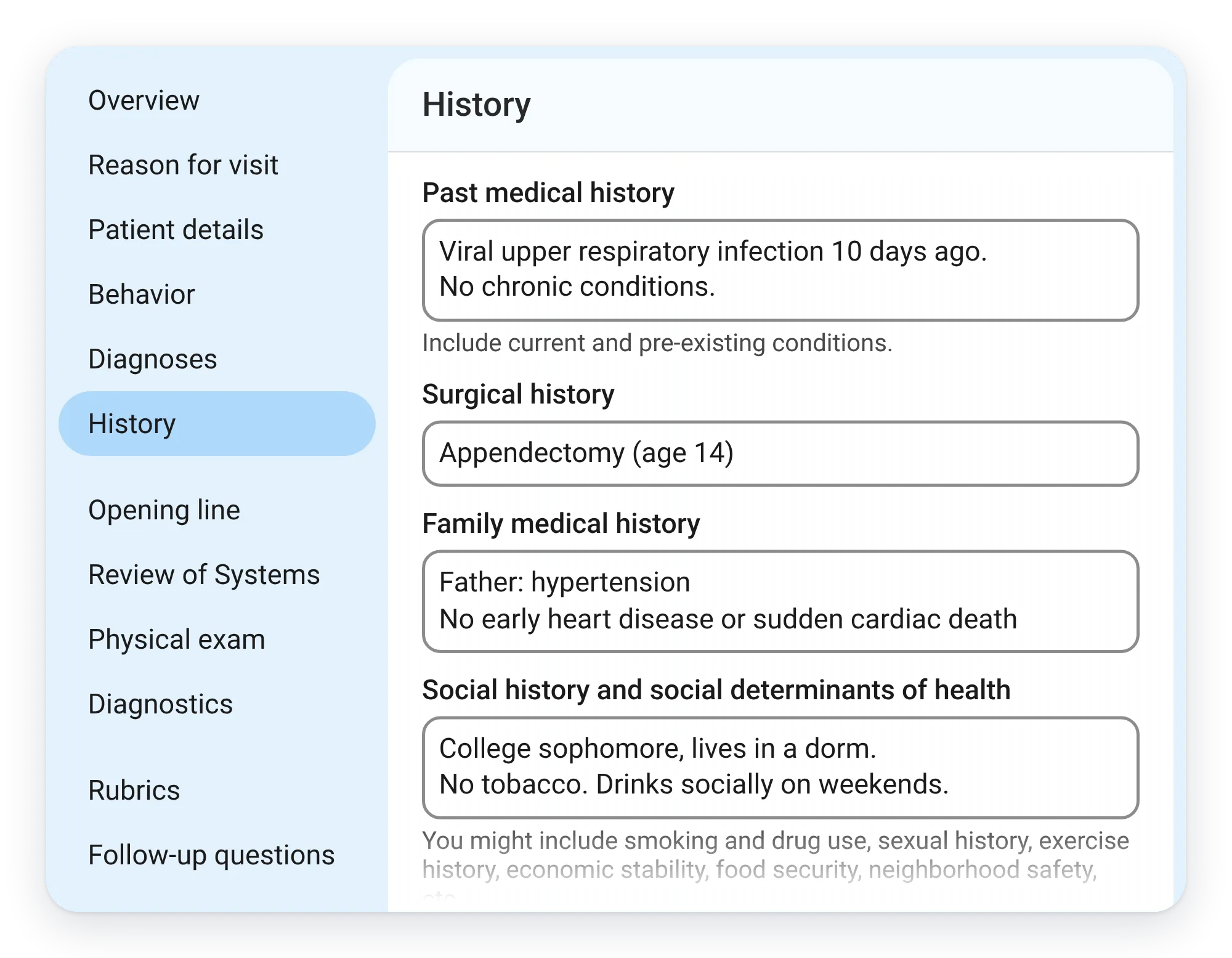
Turn the cases your clinical skills program already runs with standardized patients into AI patient encounters, or write new ones that follow your organ-system blocks.
You write the history, exam findings and results, so every student meets the same patient, as many times as they need.
Clinical skills assessment is your school's job now.
Since USMLE Step 2 Clinical Skills was discontinued in 2021, medical schools carry more of the responsibility for showing their students can take a history, examine, and reason to a plan.
LCME also expects every student to get formal formative feedback early enough in each course and clerkship to leave time for remediation.
With classes of a hundred or more students, every extra SP-based OSCE is a major lift, so one or two a year is often all a school can run. That's a thin record. Sapient Clinician adds frequent, documented encounters in between: every question, order, differential and plan, with feedback, kept for review.
How it works for medical schools.
-
Full encounters
Students work the whole visit by text or voice, from history and physical to a prioritized differential and an assessment and plan, the way they'll present on rounds.
-
Your cases
Turn your clinical skills program's SP cases into AI patient encounters, or build new ones that follow your organ-system blocks, in about 15 minutes.
-
Your rubrics
Score on your school's OSCE checklists and rubrics, including ones mapped to the AAMC Core EPAs, with specific feedback after every case.

Share with your team
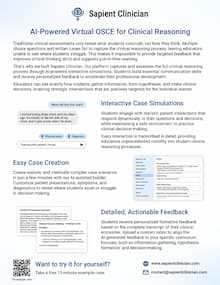
Sapient Clinician overview
What it is, how it works and where it fits, for colleagues or your curriculum committee.