
Practice & assessment
Practice and assessment, on one platform.
Use any case for low-stakes practice or as a scored assessment. Learners get frequent formative feedback, and faculty get a clear view of each learner's reasoning when it's time to score.
Two ways to use it.
Formative practice
Frequent, low-stakes reps between live encounters.
- Weekly cases that follow your curriculum
- Feedback in a minute or two, while the case is still fresh
- Practice anytime, on any device, by text or voice
Summative assessment
Standardized, scored encounters.
- Every learner meets the same patient, and the details you write stay fixed
- Scored on your rubric, with a due date
- Faculty can review and edit every score before it's returned
- A full transcript kept as a record of each learner's reasoning
Supporting a learner who's struggling? See how programs use it for remediation
Short cases for practice. Full encounters for assessment.
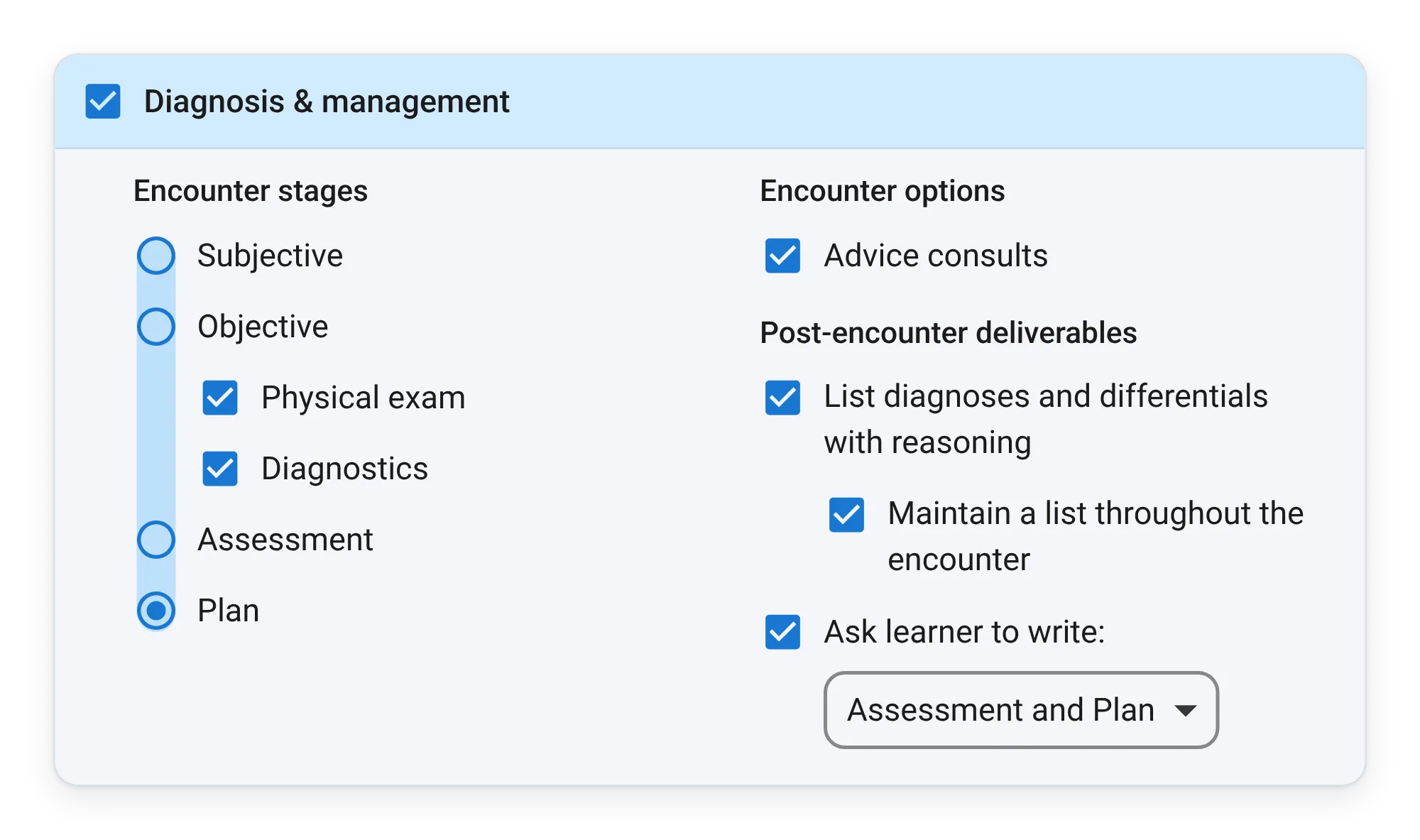
Turn parts of the encounter on or off to fit the goal. A short, focused case, like a history and differential for one chief complaint, fits into a busy week and gives learners a quick rep on one skill.
When it counts, assign the full encounter: history, physical exam, diagnostics, a differential and an assessment and plan, the way learners will face it on an OSCE. Or mix them however fits your course.
The same feedback, far more often.
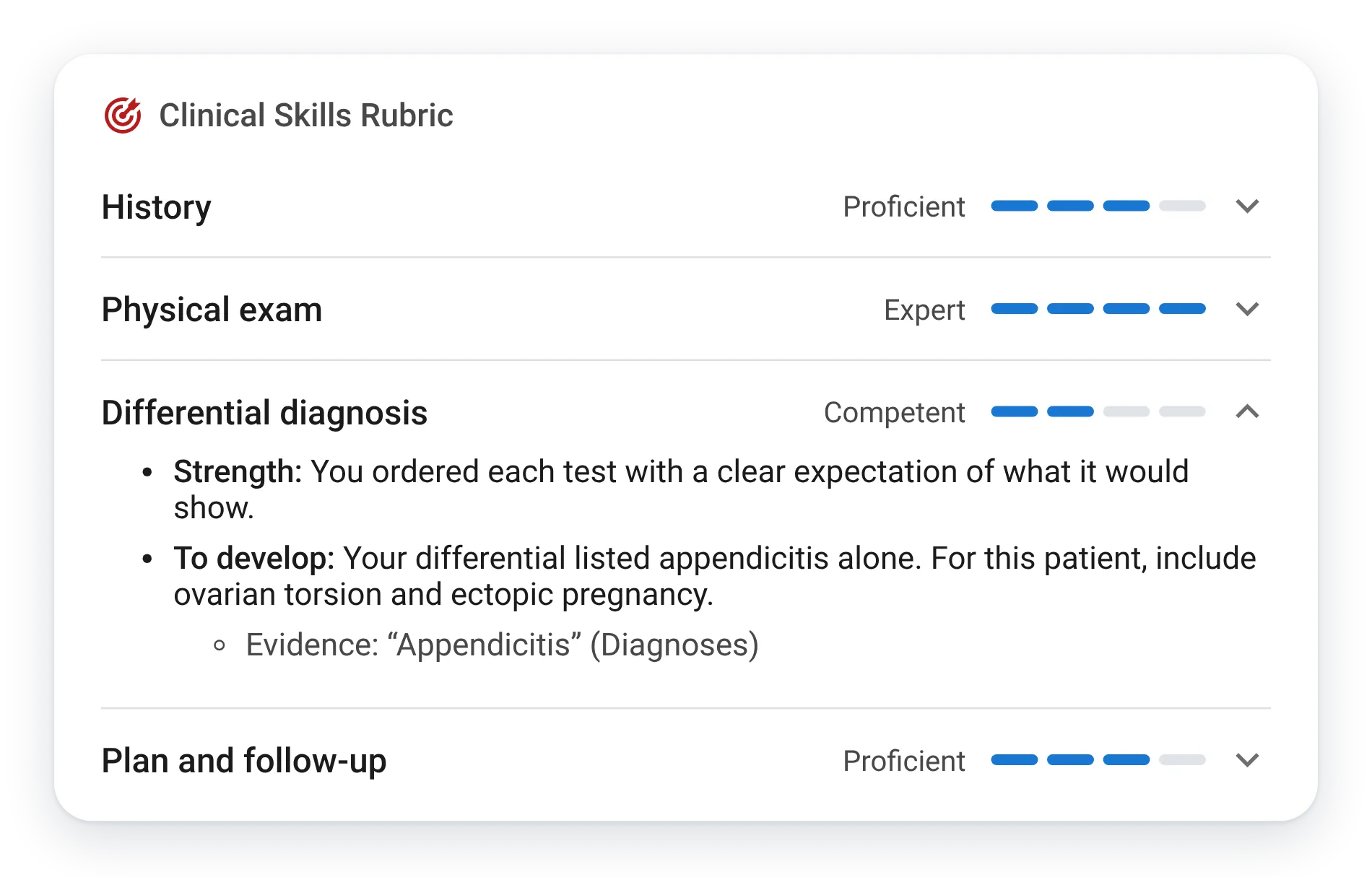
Feedback is scored on the rubric you attach, whether a case is practice or an assessment. Use the same rubric for both, so learners practice against the standard they'll be held to.
Because feedback takes a minute or two, learners can get it after every case. By the time the stakes are high, they've already seen where they stand and what to work on.
How programs set it up.
| Formative practice | Summative assessment | |
|---|---|---|
| Feedback | Released right after the case | Released after faculty review |
| How often | Weekly, or whenever learners need it | At set points, by a due date |
| Stakes | Low-stakes practice | Counts toward a grade or readiness review |
| Rubric | Your rubric, either way | |
| Record | A full transcript and feedback for every encounter | |
Built for every kind of program.
-
PA programs
More patient encounters before the clinical year.
-
MD programs
Clinical reasoning practice from the first year on.
-
DO programs
The osteopathic encounter, structural exam included.
-
Nursing & NP
NP diagnostic reasoning, plus prelicensure practice.
-
Residency & fellowships
Cases built into every rotation.
-
Health systems
Onboarding and ongoing training for clinicians.
Share with your team
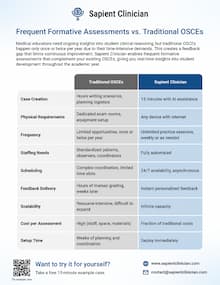
Frequent formative assessments vs. traditional OSCEs
How frequent practice fits alongside your OSCEs, for colleagues or your curriculum committee.