
Remediation
Extra practice for the learners who need it most.
When a learner struggles on an OSCE or within a rotation, give them focused practice without booking another standardized patient.
One more SP session isn't much practice.
Remediation usually means scheduling another standardized patient encounter: an actor, a room and a faculty observer, often weeks after the learner first struggled. And when it finally happens, it's one more attempt.
Sapient Clinician lets the learner start practicing right away, on their own schedule, with feedback after every case.
Built around the exact gap.
Start from what went wrong
Missed red flags, an incomplete differential, a plan that didn't follow from the findings.
Build a focused case
In about 15 minutes. Turn on only the parts of the encounter that matter, from a history alone to the full visit.
Practice on their own time
By text or voice, on any device, without waiting for an open SP slot.
Review the reasoning
Every attempt comes with the full transcript and feedback on your rubric.
Practice the skill, not the answer.
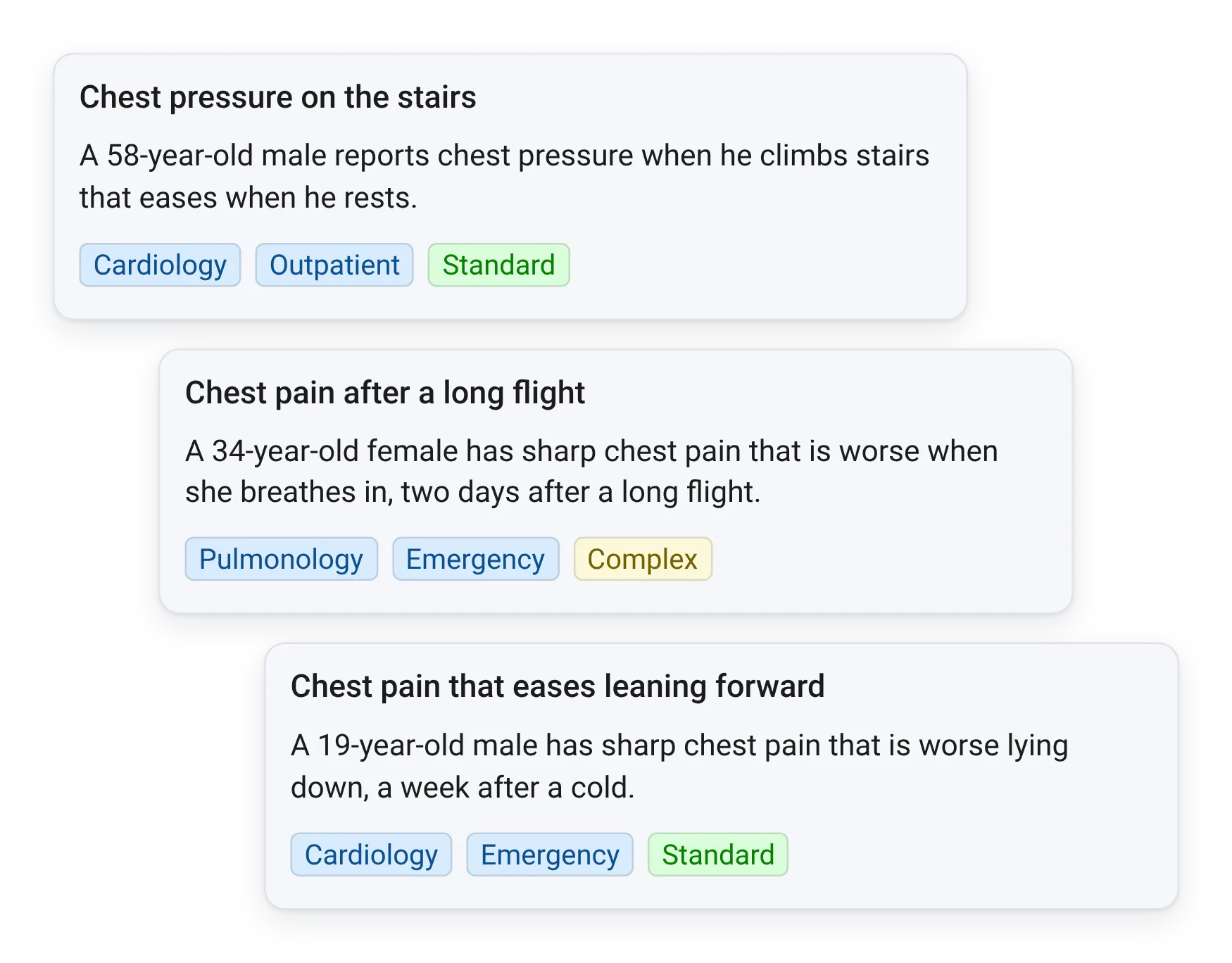
Once a learner has seen a case, repeating it can turn into memorizing it. Instead, build variations that test the same skill with a different patient.
A learner who anchored too early on chest pain can work through several presentations, so faculty can see whether they're actually testing their hypotheses or just remembering the last one.
Show what the learner worked on.
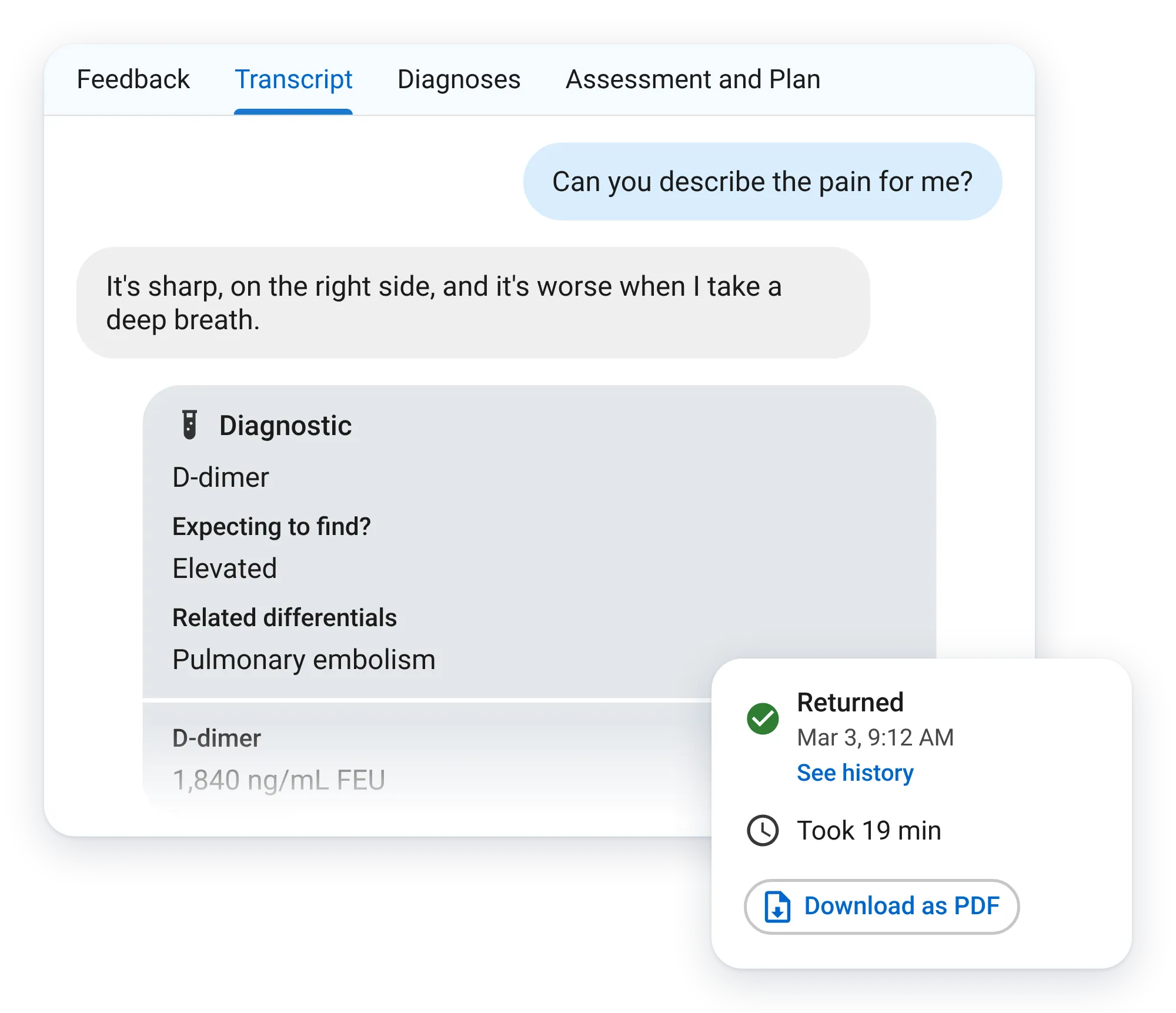
Remediation plans usually need documentation. Every attempt saves the full transcript and feedback on your rubric, so you can see exactly what the learner practiced and how they reasoned through it.
That gives you something concrete to go over with the learner, and to share with their advisor or your progress committee.
See where to focus next.
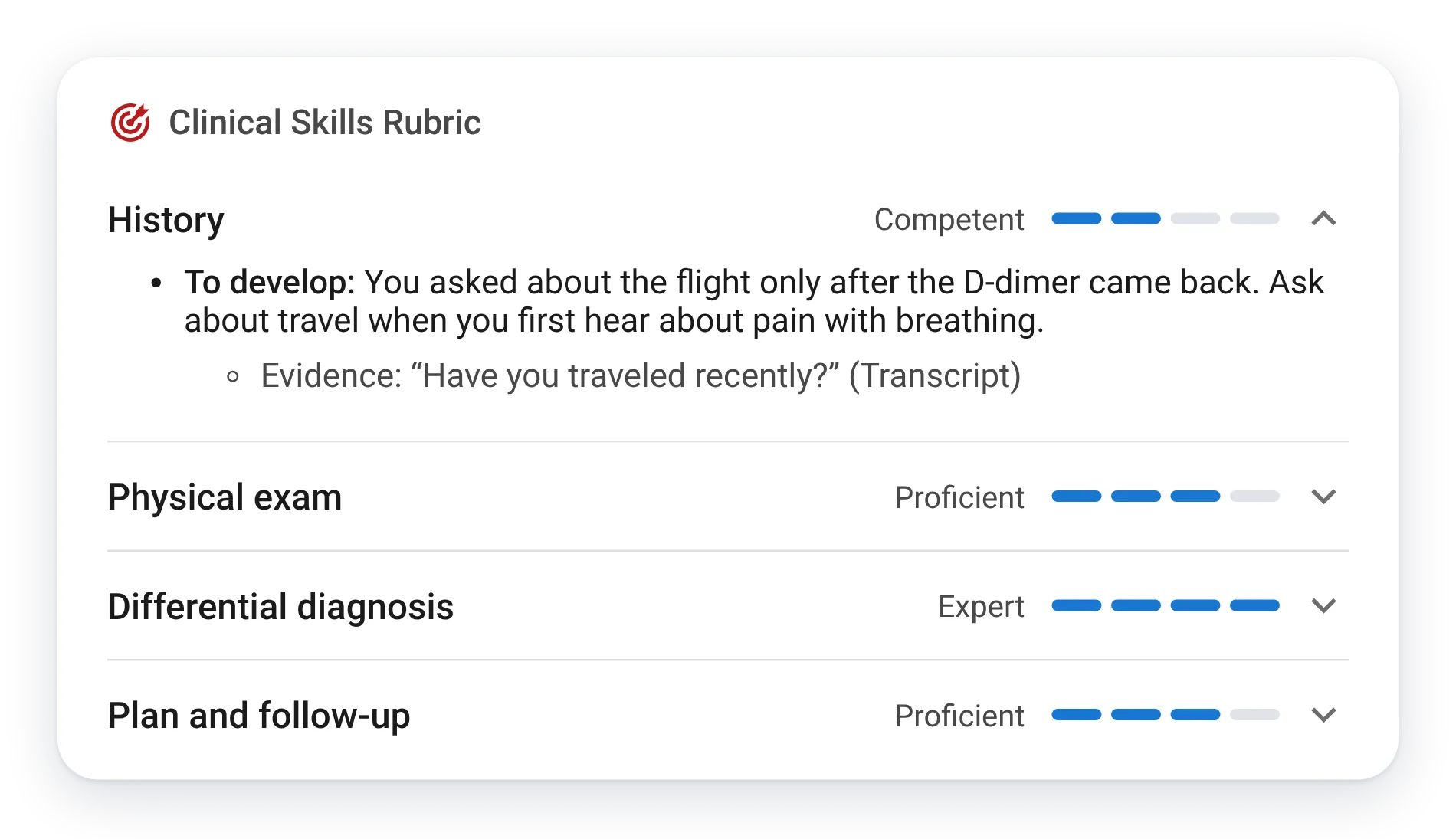
Feedback after every attempt is scored on your rubric, section by section, so you and the learner can see which skills have improved and which still need work.
Use it to choose the next case: more practice on the same skill, or on to the next gap.
Built for every kind of program.
-
PA programs
More patient encounters before the clinical year.
-
MD programs
Clinical reasoning practice from the first year on.
-
DO programs
The osteopathic encounter, structural exam included.
-
Nursing & NP
NP diagnostic reasoning, plus prelicensure practice.
-
Residency & fellowships
Cases built into every rotation.
-
Health systems
Onboarding and ongoing training for clinicians.
"Sapient Clinician is a platform that makes a real difference for students who are struggling to finish PA school."
Remediation is one part of how programs use Sapient Clinician. See practice & assessment
Share with your team
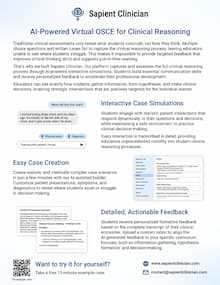
Sapient Clinician overview
What it is, how it works and where it fits, for colleagues or your curriculum committee.