
Specific, actionable feedback for every learner, based on your rubric.
Every encounter is scored against the rubric your faculty already use, with feedback tied to what the learner actually said and did.
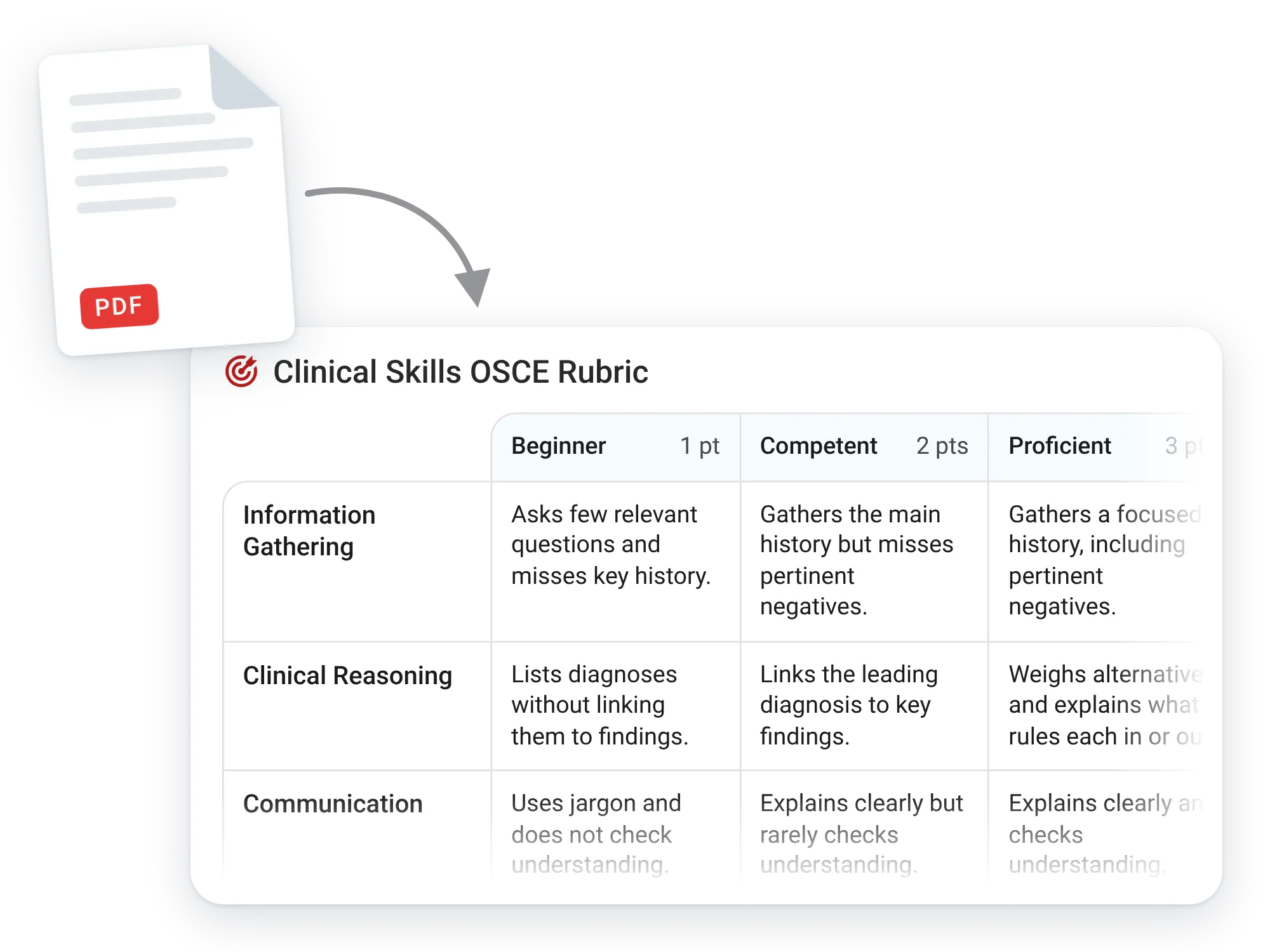
Use the rubric you already have.
Upload your rubric, like a PDF or a spreadsheet, and it becomes an editable rubric in Sapient Clinician. Any format works:
- Specific checklists, where each item is something the learner did or didn't do, like asking about onset or checking for rebound tenderness.
- Domain rubrics that score broader skills, like history taking, clinical reasoning or communication, across performance levels.
You set the scoring criteria, and the AI grader follows them. Attach more than one rubric to a case to assess different skills in the same encounter, like a history checklist alongside a communication rubric.
Feedback on the whole reasoning process.
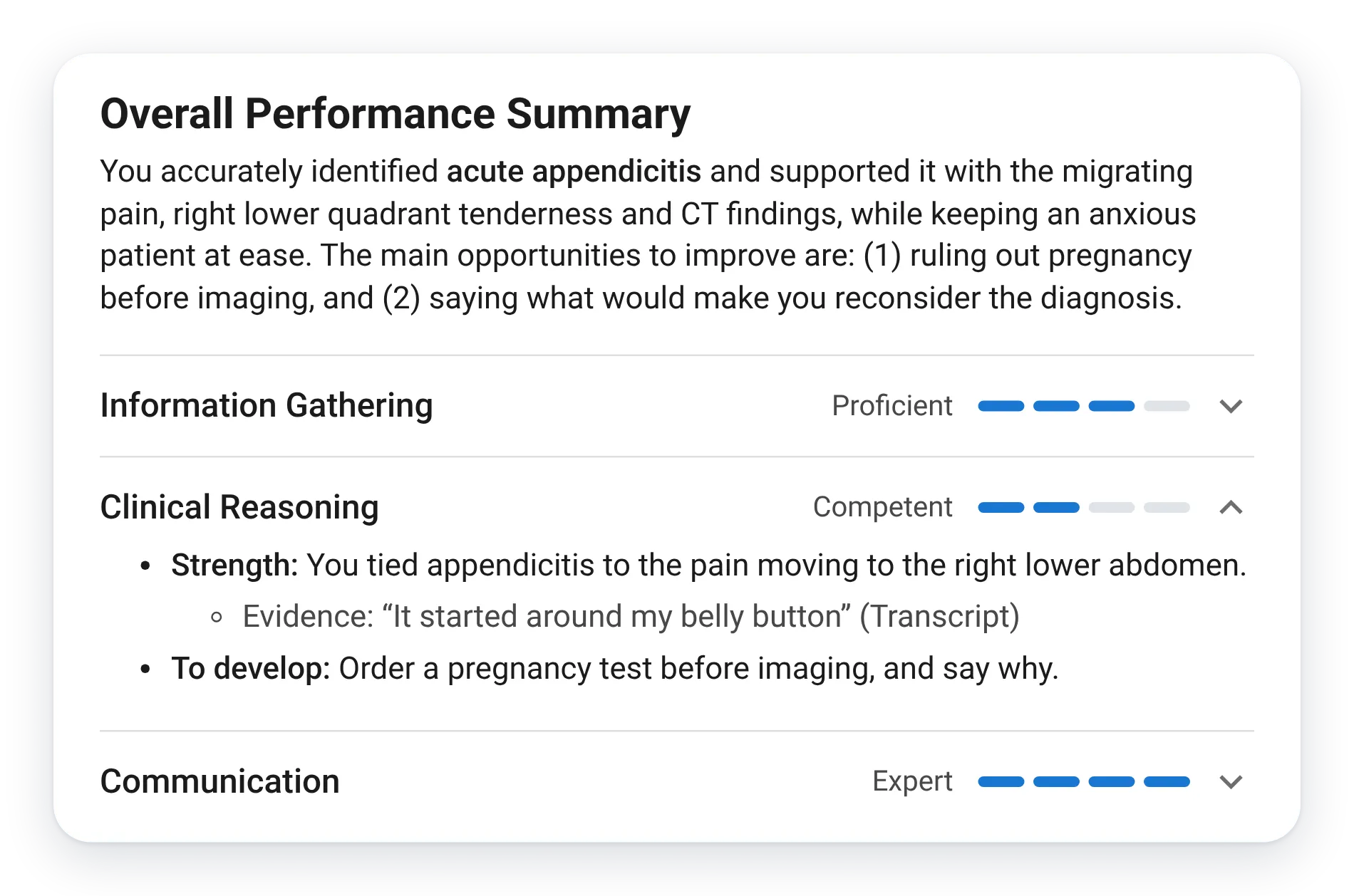
The AI grader reads the full transcript, the learner's differentials and their assessment & plan, alongside the case and your rubric. Feedback includes:
- An overall performance summary
- Scores for each criterion, with a short justification
- Strengths and areas to develop, with evidence from the transcript
You choose when learners see it: right after the case, or once faculty have reviewed and edited it.
More feedback, more often, than faculty could ever give by hand.
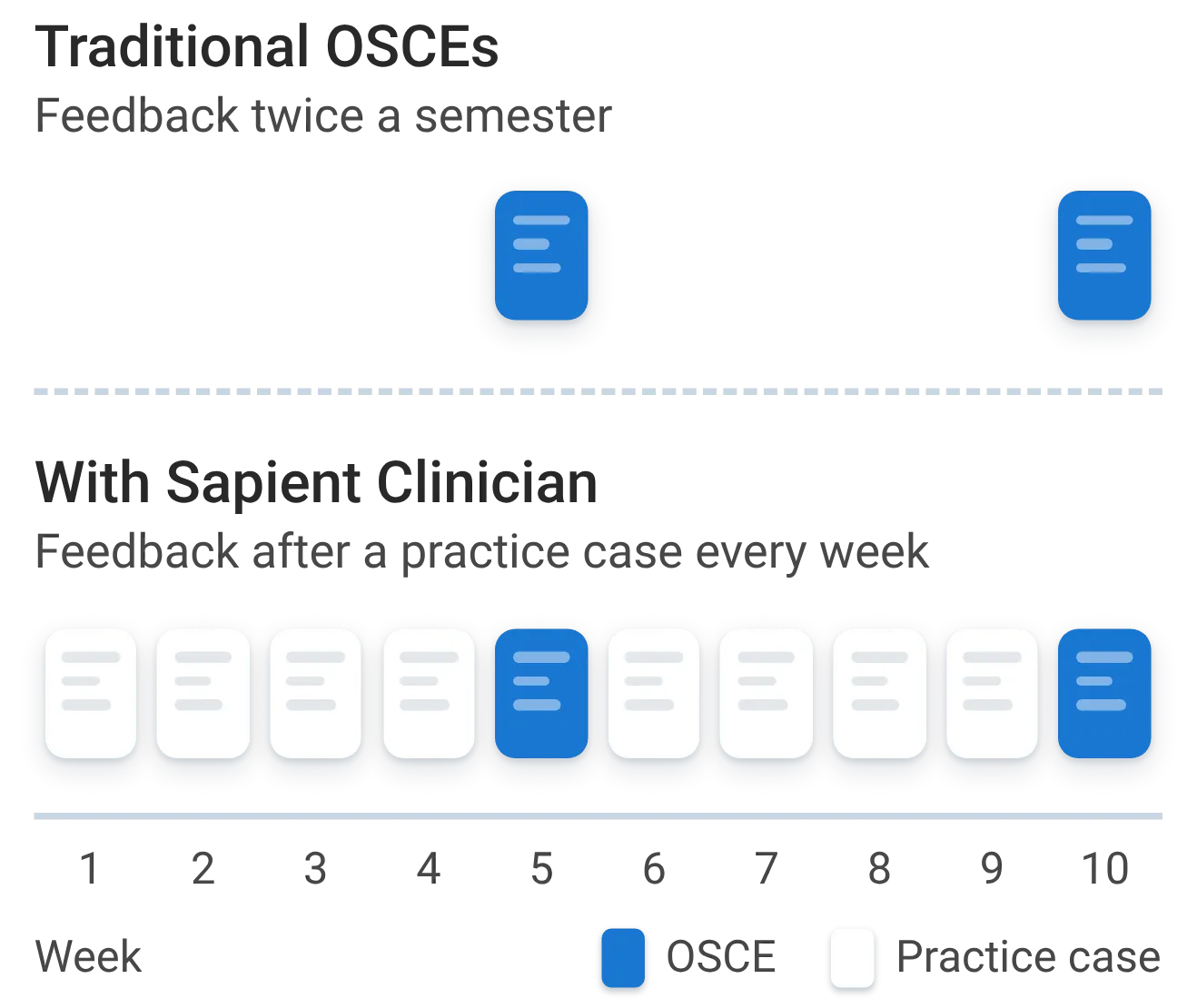
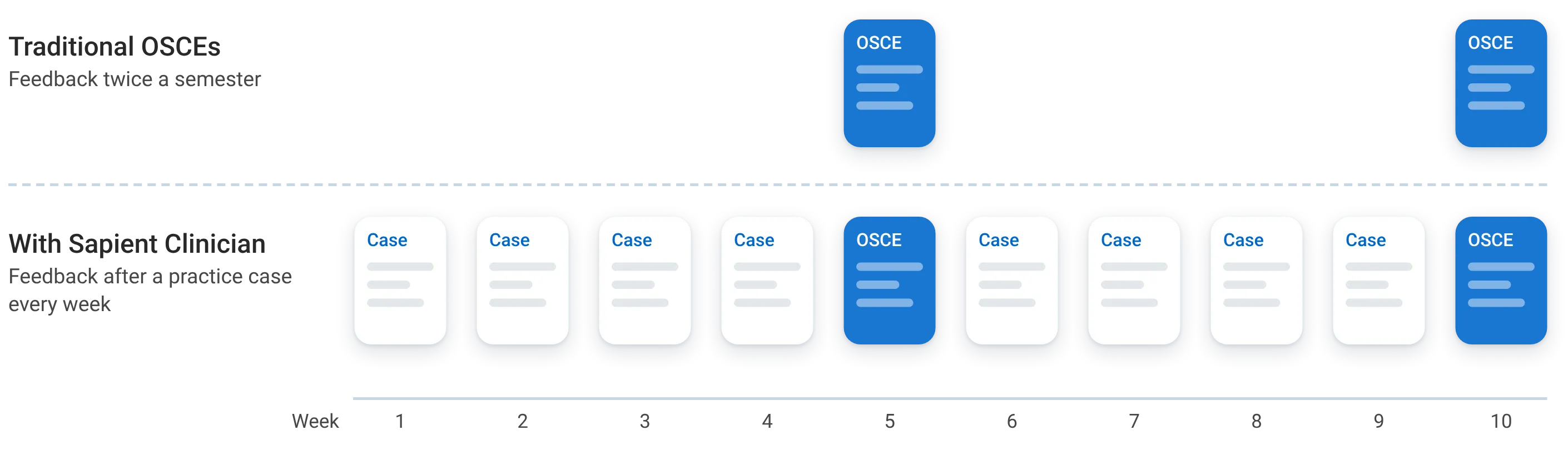
In most programs, detailed feedback on a full patient encounter happens a few times a year, after an OSCE, and often weeks later. With Sapient Clinician, every learner gets specific feedback on every encounter, minutes after they finish, to support real-time learning.
That makes it a natural formative tool: frequent, low-stakes practice where learners can see what to work on and try again right away, saving your faculty's time for the coaching only they can do. More on formative and summative use
"Having to justify our reasoning and decisions with Sapient Clinician feels medically deeper than other AI patient simulation tools."
Share with your team
Rubrics, feedback & courses fact sheet
How rubrics and feedback work, for colleagues or your curriculum committee.